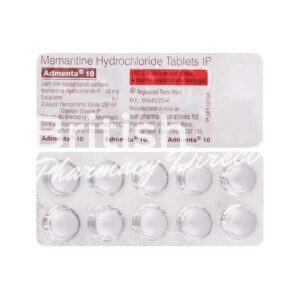
Memantine
In stock
10mg
from 68,80 £
In brief
- Memantine is used to treat adults with moderate to severe dementia of the Alzheimer’s type.
- There is one tablet strength, 10mg, and you can order 30, 60, 90, 120 or 180 at a time.
- An imported generic of a prescription-only medicine that is also licensed in the UK under the brand name Ebixa.
Memantine: protecting nerve signalling from excess glutamate
Memantine has a UK licence for treating adults whose Alzheimer’s disease has reached the moderate or severe stage. It is an NMDA receptor antagonist, which means it blocks the effect of abnormally high levels of glutamate, a chemical messenger that is thought to disrupt nerve signalling in the brain when present in excess. It does not cure the disease, but for a time it may help with memory, thinking and everyday activities.
One strength, five pack sizes
This imported generic contains 10mg of the active substance in each tablet and is offered in packs of 30, 60, 90, 120 and 180. At the standard maintenance dose of 20mg a day, taken as two 10mg tablets, a pack of 60 lasts 30 days. The 5mg and 15mg steps used at the start cannot be made from whole 10mg tablets, so the prescriber will arrange a suitable form for the first few weeks.
Memantine on UK prescription
Ebixa is the UK brand, and generic versions are also prescribed; all of them are Prescription Only Medicines. The SmPC says treatment should be started and supervised by a doctor experienced in diagnosing and treating Alzheimer’s dementia, and only when a carer is available to make sure the tablets are taken regularly. Benefit and tolerability should be reassessed, ideally within three months of starting, and then at regular intervals.
From 5mg to 20mg over four weeks
The dose goes up by 5mg each week: 5mg daily in week one, 10mg in week two, 15mg in week three and 20mg from week four onwards, which is both the maintenance dose and the maximum. The same schedule applies to people over 65. Take it once a day at the same time, with or without food. If kidney function is moderately reduced, with a creatinine clearance of 30–49ml/min, treatment stays at 10mg daily and moves up to 20mg only after a week or more without problems; with severe impairment (5–29ml/min) it stays at 10mg. It is not recommended in severe liver impairment or for anyone under 18.
Health conditions that need extra care
Apart from allergy to the active substance or another ingredient, nothing absolutely rules out treatment. Extra care is needed for people with epilepsy, those who have recently had a heart attack, and anyone whose heart failure or high blood pressure is not under control. A major change of diet, such as switching from meat to a vegetarian diet, or taking large amounts of antacids can alter the acidity of the urine and with it the level of the medicine in the body.
Medicines to mention to the doctor
Combining memantine with amantadine, ketamine or dextromethorphan should be avoided, as they act on the same receptors. It can strengthen the effects of levodopa, dopamine agonists and anticholinergic medicines, and weaken those of barbiturates and antipsychotics. Doses of baclofen and dantrolene may need adjusting, and anyone on warfarin should have their INR checked closely.
Side effects, from common to very rare
Constipation, dizziness, drowsiness and headache are among the more frequent effects, along with higher blood pressure, shortness of breath, unsteadiness and altered liver function tests. Less common effects include confusion, hallucinations, vomiting, tiredness, fungal infections, an unsteady walk and blood clots in the veins. Seizures are very rare. Because the tablets can cause drowsiness and dizziness, the doctor will advise whether it is safe to drive. Whether memantine is suitable is for the patient’s doctor or prescriber to decide.