Beloc
In stock
20mg · 40mg
from 19,11 £
In brief
- Beloc is an imported brand of metoprolol, the cardioselective beta-blocker used to lower blood pressure, ease angina and steady a fast heartbeat.
- Choice of 20 mg or 40 mg tablets, with seven quantity options between 30 and 360.
- Metoprolol is prescription-only (POM) in Britain, where licensed tablets come in 25, 50 and 100 mg.
Beloc and the way metoprolol protects the heart
Beloc is a brand of metoprolol, one of the longest-established beta-blockers. It sits mainly on the beta-1 receptors in heart muscle, so adrenaline has less pull on the heart: the pulse settles, each contraction is a little gentler and blood pressure drops. Because its effect is concentrated on the heart rather than the airways or blood vessels, metoprolol is described as cardioselective. Adults may be prescribed it, according to the UK SmPC, for any of five purposes: hypertension, angina, fast heart rhythms (supraventricular tachycardia in particular), longer-term protection after the acute phase of a heart attack, and prevention of migraine.
The 20 mg and 40 mg tablets on this page
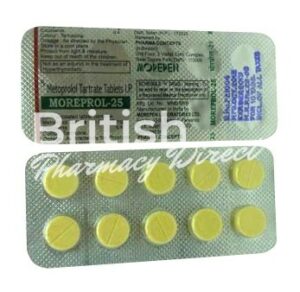
Beloc is listed here in 20 mg and 40 mg strengths, with quantities of 30, 60, 90, 120, 180, 270 and 360 tablets for each. It is an imported product and the Beloc name is not on any UK licence. In Britain, metoprolol tablets are made by several licence holders in 25 mg, 50 mg and 100 mg strengths, while the Betaloc brand appears on the electronic medicines compendium only as an injection. Since neither imported strength matches a UK tablet, a prescription written for 50 mg or 100 mg cannot simply be swapped tablet for tablet; the prescriber should confirm how many to take.
Dose ranges for each condition
The SmPC sets out guide doses that are adjusted for each patient, with an overall ceiling of 400 mg a day. Raised blood pressure is usually treated with 100 mg daily at first, rising to 200 mg if needed, as one dose or split through the day. Angina generally needs 50–100 mg twice a day, and fast rhythms 100–200 mg daily. Following a heart attack, 100 mg is taken morning and evening as maintenance; to prevent migraine, 50–100 mg twice daily. The tablets are taken on an empty stomach. No change is needed for kidney problems, and a lower dose is considered only in severe liver disease. Data in children are limited, so metoprolol is not recommended for them.
Coming off Beloc gradually
A beta-blocker must not be stopped all at once, because sudden withdrawal can worsen heart failure and raise the risk of a heart attack. The SmPC describes tapering over at least two weeks, with the last six days on 25 mg before treatment ends, and a slower pace if symptoms appear. Anyone due an operation should tell the anaesthetist that they take a beta-blocker; treatment is normally continued through surgery rather than interrupted.
When metoprolol is not suitable
The SmPC rules out metoprolol in second- or third-degree heart block, sick sinus syndrome, a resting pulse below 50, systolic pressure under 90 mmHg, cardiogenic shock, unstable heart failure needing intravenous support, severe peripheral arterial disease, metabolic acidosis, severe asthma or COPD, and untreated phaeochromocytoma. Verapamil- or diltiazem-type calcium blockers given into a vein are also contraindicated, except in intensive care. Extra caution applies with asthma, diabetes (warning signs of a hypo can be masked), psoriasis, an overactive thyroid and Prinzmetal’s angina. Combinations to discuss with the prescriber include propafenone, barbiturates, other medicines for heart rhythm, digoxin and sulfonylureas.
Possible side effects
Tiredness is the effect people mention most, and the SmPC notes that most reactions are mild and settle. Others on the list include a slow pulse, dizziness on standing, cold hands and feet, headache, disturbed sleep or vivid dreams, low mood, stomach upset, breathlessness on exertion, dry or irritated eyes and flare-ups of psoriasis. Thrombocytopenia and agranulocytosis are very rare. Whether Beloc suits a given patient, and at what dose, is a decision for the prescriber.