Nebivolol
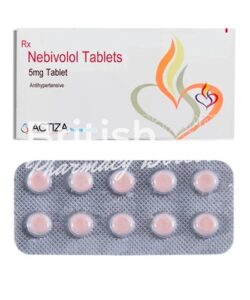
In stock
2,5mg · 5mg · 10mg
from 28,48 £
In brief
- Nebivolol is a cardioselective beta-blocker; in the UK it is a POM licensed for raised blood pressure and, from the age of 70, for stable heart failure.
- Imported generic: 30 to 360 tablets per pack at 2.5 mg or 5 mg, and 30 to 180 at 10 mg.
- For hypertension one 5 mg tablet daily is typical, while heart-failure doses are increased step by step to a 10 mg maximum.
Nebivolol: a beta-blocker aimed at the heart
Nebivolol belongs to the beta-blockers and is selective for the beta-1 receptors in the heart. By blunting the action of adrenaline there it slows the pulse and brings blood pressure down, easing the heart’s workload. The tablets offered here are an imported generic rather than a UK-registered pack.
Licensed indications and UK status
Two indications appear in the UK SmPC. One is essential hypertension, that is, raised blood pressure without an identified cause. The other is chronic heart failure that is stable and mild to moderate, in people aged 70 or above, where it supplements their usual treatment. It is a prescription-only medicine in Britain, available as the Nebilet brand and as licensed generics.
Available strengths and quantities
There is a choice of three strengths. Both the 2.5 mg and the 5 mg strength can be ordered as 30, 60, 90, 120, 180 or 360 tablets; for 10 mg the largest pack is 180, with 30, 60, 90 and 120 also listed. The 2.5 mg tablet corresponds to the lower starting dose for older patients and those with kidney problems, and 10 mg to the heart-failure maximum.
Two different dosing schedules
In hypertension, the standard dose is one 5 mg tablet daily, taken with or without food. The fall in blood pressure becomes noticeable after one to two weeks, and sometimes the full effect takes about four. Patients over 65, or with renal insufficiency, are given 2.5 mg at first, increasing to 5 mg if required. Heart failure follows a slower schedule supervised by an experienced physician: 1.25 mg once daily to start, then 2.5 mg, 5 mg and finally 10 mg, with one to two weeks at each step if the previous dose is tolerated. The maximum in heart failure is 10 mg once a day. Treatment should be withdrawn gradually rather than stopped at once, particularly in heart failure or coronary heart disease.
Contraindications in the SmPC
According to the SmPC, it should not be used with liver impairment, acute heart failure or episodes of decompensation needing intravenous inotropes, cardiogenic shock, sick sinus syndrome or sino-atrial block, second- or third-degree heart block without a pacemaker, a history of bronchospasm or asthma, untreated phaeochromocytoma or metabolic acidosis. A heart rate under 60 beats a minute before treatment, systolic pressure below 90 mmHg and severe peripheral circulation problems are further reasons to avoid it. Anyone due to have surgery should let the anaesthetist know they take a beta-blocker.
Combinations needing caution
Verapamil or diltiazem combined with a beta-blocker may slow conduction through the heart to a dangerous extent, and class I anti-arrhythmics need similar care. Clonidine or moxonidine, if taken as well, must not be stopped abruptly. Paroxetine, fluoxetine, thioridazine and quinidine inhibit CYP2D6 and can raise nebivolol levels. An additive drop in blood pressure is possible with tricyclic antidepressants, barbiturates or phenothiazines. For people with diabetes, a beta-blocker can mask the fast heartbeat that normally signals a hypo.
Side effects of nebivolol
Common effects include headache, dizziness, tingling, breathlessness, constipation, nausea, diarrhoea, tiredness and ankle swelling. Less common ones are a slow pulse, low blood pressure, worsening heart failure, nightmares, depression, impaired vision, wheeze, indigestion, itching, rash and erectile dysfunction. Dizziness or fatigue can affect driving. It is for the doctor or prescriber to decide whether nebivolol is appropriate.