Prednisolone
In brief
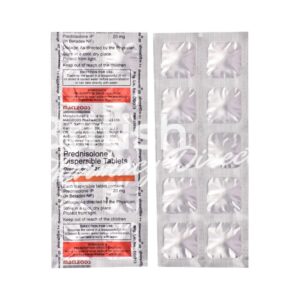
- Prednisolone is available from British Pharmacy Direct as 5mg tablets (packs of 90 to 360), 10mg (60 to 360), plus 20mg and 40mg (30 to 360); UK delivery takes 9–21 days.
- A glucocorticoid steroid, it suppresses inflammation and immune overactivity, so it is used for conditions as varied as asthma and COPD exacerbations, lupus, vasculitis, and certain blood and bowel diseases.
- UK-licensed tablets exist in 5mg, 10mg and 20mg, whereas 40mg is not a UK strength; the dose is generally taken once in the morning with food to follow the natural cortisol pattern.
- After weeks of treatment the adrenal glands slow down, so the dose must be tapered rather than stopped, a steroid card kept on you, and advice sought on what to do during vomiting or infection.
- Higher blood pressure, thinner skin, cataracts, mood swings and infections are risks of long courses; live vaccines are avoided and NSAIDs used only on advice. It is a UK POM.
Basic prednisolone information
- INN (international nonproprietary name): Prednisolone.
- Brand names available in the United Kingdom: Deltacortril, Deltastab, Dilacort, Pevanti.
- ATC code: H02AB06.
- Forms and dosages: Tablets 1 mg, 2.5 mg, 5 mg, 10 mg, 25 mg; oral solution 5 mg/5 mL; eye drops 0.5%, 1%.
- Manufacturers in the United Kingdom: Teva, Morningside and other generic manufacturers.
- Registration status in the United Kingdom: UK MHRA approved, prescription only.
- OTC / Rx classification: Prescription only (Rx), not available over the counter.
Critical warnings and patient protection in the UK
Prescription-only status and why prednisolone needs caution
Worried about whether prednisolone is just a “strong anti-inflammatory” you can use like a painkiller?
It is not.
Prednisolone is a systemic corticosteroid, ATC H02AB06, and in the UK it is an MHRA-approved prescription-only medicine.
That means it should be used in adults and children only when a prescriber has instructed it, because the wrong dose or the wrong length of treatment can cause serious side effects.
In the UK, you may see it under brand names such as Deltacortril, Deltastab, Dilacort, and Pevanti.
As with other steroid tablets for inflammation, the benefit can be excellent when it is used correctly, but it is not suitable for casual or repeated self-treatment.
Anyone starting prednisolone should understand the dose, the plan for stopping, and the warning signs that need urgent review.
High-risk groups and immediate safety advice
Certain patients need extra caution from the very first dose.
That includes older adults, pregnant or breastfeeding patients, and anyone with diabetes, high blood pressure, osteoporosis, infection, mental health conditions, or liver or kidney impairment.
If the medicine is being started after a Friday-evening GP appointment, the practical advice is the same: read the instructions carefully and do not improvise with the dose.
Seek urgent medical help if any of the following happen.
- Fever or a new infection that is worsening.
- Black stools or severe abdominal pain.
- Severe mood change, agitation, or confusion.
- Breathlessness or facial swelling.
- Any strong sign of infection, such as feeling suddenly very unwell.
Micro-FAQ
Q: Is prednisolone safe to stop suddenly?
A: Not always. Stopping abruptly can be dangerous after longer courses; follow the prescriber’s taper advice.
Effects on alertness and performance
Could prednisolone affect driving or work on site?
It can, because some people get mood changes, sleep disturbance, blurred vision, dizziness, or shakiness.
In the UK, patients should judge their own fitness to drive under the Highway Code and workplace safety rules.
A person may feel fine one morning and then notice blurred vision or poor concentration by the afternoon, so it is sensible to be cautious.
Practical precautions for patients
When prescribed, prednisolone is often taken in the morning with food to reduce stomach upset and to fit better with the body’s natural steroid rhythm.
If vision, mood, or concentration is affected, avoid hazardous tasks, ladders, machinery, and driving.
Before getting behind the wheel, run through this quick check.
- Do I feel fully alert?
- Is my vision clear?
- Am I shaky, dizzy, or unusually wired?
- Have I slept badly enough to affect concentration?
- Do I feel emotionally unsettled or irritable?
Micro-FAQ
Q: Can I drive after taking prednisolone in the UK?
A: Often yes, but only if you feel fully alert and your vision is unaffected; don’t drive if you feel unwell.
INN, synonyms, and UK brand names
Prednisolone is the International Nonproprietary Name, or INN, used across prescribing systems and product literature.
In UK pharmacies, the brands most people recognise are Deltacortril, Deltastab, Dilacort, and Pevanti.
What type of medicine it is
This is a corticosteroid for systemic use, which means it acts throughout the body rather than only in one area.
It has anti-inflammatory and immunosuppressive effects, so it is used where the immune system or inflammation is causing harm.
It is not the same as anabolic steroids used in bodybuilding.
- INN
- Prednisolone.
- Brand name
- A market name such as Deltacortril or Dilacort.
- Corticosteroid
- A steroid medicine used to reduce inflammation and immune activity.
- Systemic use
- Used to affect the whole body, not just one local site.
Available forms and common strengths
In UK practice, tablets and oral liquid are the most familiar forms, especially when a child, older adult, or swallowing difficulty is involved.
Eye drops are reserved for local treatment of the eye.
Packaging often comes as blisters for tablets or bottles for liquid.
| Form | Common strengths | Typical use |
|---|---|---|
| Tablets | 1 mg, 2.5 mg, 5 mg, 10 mg, 25 mg | Most common for adults and older children |
| Oral solution | 5 mg/5 mL | Useful for children or anyone who cannot swallow tablets |
| Eye drops | 0.5%, 1% | Local use where prescribed |
How prednisolone works
People often ask why a steroid can help so quickly.
The simple answer is that it reduces inflammation by dampening immune signals and easing swelling, redness, and immune overactivity.
For medical readers, it has glucocorticoid activity, suppresses inflammatory mediators, and modifies the immune response.
- What it does: reduces swelling, calms inflammation, and tempers immune activity.
- What it does not do: it does not cure the underlying cause on its own, and it is not an antibiotic.
MHRA-approved and common NHS uses
Prednisolone is commonly prescribed in the NHS for acute asthma or COPD exacerbations, severe allergic reactions, rheumatoid and other autoimmune disease, and adrenal insufficiency.
It may also be used in other inflammatory disorders under specialist care.
For example, a patient with an asthma flare may receive a short course of prednisolone tablets, while someone with adrenal insufficiency may need maintenance treatment for longer-term replacement.
The NHS generally aims for the lowest effective dose for the shortest possible time where appropriate.
| Condition | Typical adult starting dose | Usual duration |
|---|---|---|
| Acute asthma / COPD | 40–50 mg daily by mouth | 5–7 days |
| Severe allergic reaction | 30–60 mg daily | Several days |
| Rheumatoid / autoimmune disease | 10–15 mg daily, sometimes up to 60 mg | Weeks to months, depending on response |
| Adrenal insufficiency | 5–7.5 mg daily | Long-term maintenance |
Micro-FAQ
Q: Is prednisolone an antibiotic?
A: No. It is a steroid medicine, not an antibiotic.
Typical regimens
Doses vary by condition, and the plan should always come from the prescriber rather than a search result.
A short asthma course is very different from long-term autoimmune treatment, and the tablet strength may be the same while the schedule is not.
The right tablet strength depends on the intended regimen.
| Use | Typical dose | Taper advice |
|---|---|---|
| Acute asthma / COPD | 40–50 mg daily in the morning | Usually stop or taper after 5–7 days if directed |
| Severe allergy | 30–60 mg daily | Often reduced after several days |
| Autoimmune disease | 10–15 mg daily, sometimes up to 60 mg | Titrate down over weeks or months |
- Take exactly as prescribed.
- Use the morning dose where advised.
- Do not change the dose because you feel better quickly.
- Do not stop early unless the prescriber has told you to.
Children and weight-based dosing
In children, dosing is usually based on body weight, at 1–2 mg/kg/day, with a maximum of 40 mg.
Short courses are preferred, and specialist supervision is essential.
A child with wheeze or severe inflammation may be given a liquid formulation rather than tablets, which can make the dose easier to measure accurately.
Elderly and comorbidities
Older adults need particular caution because the risks of osteoporosis, diabetes, and hypertension are higher.
For that reason, prescribers aim for the lowest effective dose and monitor long-term use more closely.
Someone with diabetes or raised blood pressure may notice these conditions become harder to control during treatment.
Liver and kidney impairment
Reduced clearance means the medicine may stay in the body longer.
That can mean dose adjustment, closer monitoring, or a different tapering plan.
When prescribers review a patient with organ impairment, these points are usually checked.
- Current liver and kidney function.
- Other medicines being taken.
- Any history of steroid side effects.
- Whether a lower dose or altered taper is needed.
What to do if a dose is missed
If a dose is missed, take it when remembered unless it is nearly time for the next dose.
Never double up unless the prescriber has specifically told you to do so.
For a once-daily morning regimen, a missed dose is usually more important to discuss if you miss several doses in a row.
Signs of overdose or serious harm
Overdose is not something to ignore, especially if the patient is already unwell.
- Severe agitation.
- Vomiting.
- Confusion.
- Symptoms of high blood sugar.
- Infection getting worse.
Micro-FAQ
Q: What if I miss a dose of prednisolone?
A: Take it when you remember on the same day, or skip it if the next dose is due soon; follow your prescriber’s advice.
Taking prednisolone with meals
Prednisolone is commonly taken with or after food to reduce stomach upset.
That is particularly useful if someone already has a sensitive stomach or is taking a short burst for an acute flare.
Alcohol, caffeine, and diet
Alcohol should be treated cautiously, because it can add to stomach irritation.
Prednisolone can also increase appetite, cause fluid retention, and raise blood sugar.
- Take doses with food where advised.
- Keep an eye on appetite and portion sizes.
- Limit alcohol if your stomach is sensitive.
- Choose balanced meals if blood sugar is a concern.
Medicines that may interact
Interaction checks matter because prednisolone may change the effect of other medicines or increase the risk of side effects.
Common examples include NSAIDs, anticoagulants, diabetes medicines, some anti-epileptics, vaccines, and other medicines that raise bleeding or infection risk.
That is why a pharmacy check is so useful before the first dose, especially if the patient already takes regular treatment.
| Medicine / class | Interaction concern | Action |
|---|---|---|
| NSAIDs | Higher stomach irritation and bleeding risk | Check before combining |
| Anticoagulants | Bleeding risk may change | Monitoring may be needed |
| Diabetes medicines | Blood sugar may rise | Watch glucose closely |
| Some anti-epileptics | May alter steroid levels | Prescriber review advised |
| Vaccines | Infection and immune-response concerns | Ask before vaccination |
- Interaction
- When one medicine affects another medicine’s action or safety.
- Contraindication
- A situation where a medicine should not be used, or should only be used with specialist advice.
- Adverse effect
- A harmful or unwanted effect from treatment.
Suspected adverse reactions can also be reported through the Yellow Card system.
Common short-term side effects
The side effects most people notice first are mood changes, sleep disturbance, increased appetite, indigestion, fluid retention, and a rise in blood sugar.
Some people feel “wired” after taking the tablet, while others feel unsettled or find it harder to sleep.
With short courses, these effects are often temporary, but they still matter if they affect driving, work, or sleep.
Serious and long-term effects
With longer use, risks include osteoporosis, adrenal suppression, hypertension, cataracts, glaucoma, infection risk, and skin thinning.
These risks are why long courses need a proper plan and regular review rather than casual repeat prescribing.
Patients who have had several steroid courses in a year should mention that to a clinician, because the cumulative burden matters.
When to seek urgent help
Get urgent advice if there is fever, severe abdominal pain, breathlessness, black stools, confusion, or eye pain.
These symptoms can point to a serious complication or a worsening underlying condition.
- Common: appetite increase, indigestion, sleep disturbance, mood change.
- Urgent: black stools, breathlessness, severe mood change, fever, eye pain, confusion.
| Side effect | Likelihood | Action |
|---|---|---|
| Mood change | Common | Monitor; seek help if severe |
| Sleep disturbance | Common | Morning dosing may help if prescribed |
| Blood sugar rise | Common | Check levels if diabetic |
| Osteoporosis | Long-term risk | Needs preventive review |
| Eye pain or vision change | Serious | Urgent medical assessment |
Legal status and availability in the UK
Prednisolone is a prescription-only medicine (POM) in the UK, so access should always be through proper clinical oversight.
In our online pharmacy, prednisolone is available without a prescription, with discreet delivery to the United Kingdom in 9–21 days.
Brand and generic availability can vary, and a pharmacist may supply a different brand or formulation if the prescribed one is not in stock.
How to take prednisolone properly
Follow the exact schedule on the prescription or patient leaflet.
Morning dosing is often used when prescribed, and tapering matters when the prescriber has directed it.
Do not share prednisolone with anyone else, and do not switch brands or forms without checking that the dose is equivalent.
If a liquid is prescribed, measure it carefully rather than guessing with a kitchen spoon.
Storage and handling in UK homes
Store prednisolone at room temperature.
Keep it dry and out of bathroom humidity.
Make sure it is kept out of sight and reach of children.
Tablets and bottles should be stored in their original packaging where possible so the label remains clear.
| Item | Storage | Disposal / note |
|---|---|---|
| Tablets | Room temperature, dry place | Keep in original blister if possible |
| Liquid | Room temperature unless labelled otherwise | Measure doses carefully |
| Eye drops | Keep tightly closed | Follow product directions |
UK pharmacist counselling points
UK pharmacists commonly reinforce dose timing, what to do if a dose is missed, infection warning signs, and when to seek review.
That conversation matters because a short burst for asthma is not the same as longer treatment for autoimmune disease, and the stop plan may be different.
Before you start, make sure the dose and duration are clear.
While taking it, watch for mood, sleep, and blood sugar changes.
When stopping, follow the prescriber’s advice on tapering or finishing the course.
- Before you start: check dose, strength, and whether tapering is needed.
- While taking: monitor for infection, stomach upset, mood change, and raised blood sugar.
- When you stop: follow the exact plan and do not cut short the course on your own.
Delivery across the United Kingdom
| City | Region | Delivery time |
|---|---|---|
| London | England | 9–21 days |
| Birmingham | England | 9–21 days |
| Manchester | England | 9–21 days |
| Liverpool | England | 9–21 days |
| Leeds | England | 9–21 days |
| Glasgow | Scotland | 9–21 days |
| Edinburgh | Scotland | 9–21 days |
| Cardiff | Wales | 9–21 days |
| Belfast | Northern Ireland | 9–21 days |
| Newcastle upon Tyne | England | 9–21 days |
| Sheffield | England | 9–21 days |
| Bristol | England | 9–21 days |
| Nottingham | England | 9–21 days |
| Aberdeen | Scotland | 9–21 days |
| Plymouth | England | 9–21 days |