Ivermectin
In brief
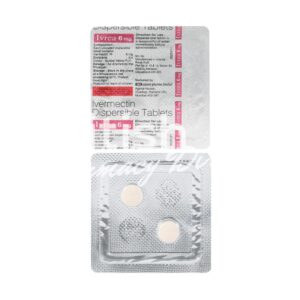
- Ivermectin at British Pharmacy Direct is listed as 3mg tablets (20 up to 270) and as 6mg and 12mg tablets (10 up to 100), with UK delivery in 9–21 days.
- This antiparasitic treats strongyloidiasis, an intestinal roundworm infection, and scabies mites, notably crusted scabies where creams do not suffice.
- The 6mg and 12mg tablets are not UK-licensed strengths, and the dose depends on body weight.
- Children under 15 kg are not normally treated, and anyone who has lived in an area with Loa loa eyeworm should be tested first because severe reactions can follow.
- It can raise the INR in warfarin users, and a mild fever, rash or tiredness may appear as parasites die. In the UK it is a POM and needs medical supervision.
Basic ivermectin information
- INN (international nonproprietary name): Ivermectin
- Brand names available in the United Kingdom: Stromectol (tablets); Soolantra (cream 1%)
- ATC code: P02CF01
- Forms and dosages: Oral tablets 3 mg; topical cream 1% (10 mg/g); veterinary products are separate and not for human use
- Manufacturers in the United Kingdom: MSD (Stromectol); Galderma (Soolantra)
- Registration status in the United Kingdom: Prescription only for human use; veterinary forms are separately registered
- OTC / Rx classification: Prescription-only medicine (POM) for oral and topical human use
Worried about whether ivermectin is the right medicine, or whether a product found online is safe?
That concern is sensible, because the difference between a licensed human product and a veterinary pack is not just the label.
In the UK, oral ivermectin is prescription only, and the safest route is always an NHS prescription or a pharmacist-led supply from a UK-registered pharmacy.
Do not use veterinary ivermectin in people
Human ivermectin and veterinary ivermectin are not interchangeable, even when the active ingredient sounds the same.
Veterinary products such as Ivomec are not licensed for human use in the UK, and the strength, excipients, and dosing format can be very different.
That is where overdose risk, dosing mistakes, and counterfeit products become a real problem, especially with unregulated websites and social media sellers.
A UK-registered supply chain matters because it gives you traceable stock, correct labelling, and pharmacist counselling before you take a dose.
If a prescriber thinks ivermectin is appropriate, an NHS prescription or a carefully checked private prescription is the first-line safeguard.
Red flags include the wrong brand, a child under 15 kg, severe liver disease, or a travel history suggesting possible Loa loa exposure.
- Wrong brand or packaging that looks veterinary
- Child under 15 kg or under 5 years of age
- Severe liver disease or jaundice
- Possible Loa loa exposure after travel to relevant regions
High-risk groups and when to seek urgent help
Pregnant people, breastfeeding mothers, older adults, people with significant neurological disease, and anyone with hepatic impairment need extra caution.
Oral ivermectin and ivermectin cream are prescription-only medicines in the UK.
If treatment has been started and any of these happen, urgent review is needed rather than waiting it out.
- Confusion or unusual behaviour
- Severe dizziness or unsteadiness
- Widespread rash or blistering
- Breathing issues or wheezing
- Fainting, collapse, or marked drowsiness
Micro-FAQ
Q: Can I take ivermectin if I’m pregnant?
A: Only if a clinician decides the benefits outweigh the risks.
What ivermectin is: class, use, and UK naming
People often ask whether ivermectin is an antibiotic, a worming tablet, or something else entirely.
It is an antiparasitic medicine in the macrocyclic lactone class, with ATC code P02CF01.
INN means the International Nonproprietary Name, ATC code means the Anatomical Therapeutic Chemical classification, macrocyclic lactone is the drug class, and POM means prescription-only medicine.
In UK practice, patients may see ivermectin tablets or Soolantra cream through regulated channels, depending on the indication.
INN, ATC code and formulations
The active ingredient name is ivermectin, and that is the name used across different countries and brands.
Human and veterinary formulations exist, but only human products are suitable for people.
Brand names and UK-relevant examples
| Formulation | Strength | Human or veterinary |
|---|---|---|
| Stromectol tablets | 3 mg | Human |
| Soolantra cream | 1% (10 mg/g) | Human |
| Ivomec | Various veterinary strengths | Veterinary |
How ivermectin works in the body
Ivermectin works by disrupting the nerve and muscle function of parasites.
That disruption paralyses the parasite, and the organism dies or becomes unable to survive in the host.
Because of that mechanism, it is used for certain infestations and worm infections, not as a general all-purpose medicine.
Why it is used for certain infestations
Its mechanism is why it can help in scabies, strongyloidiasis, onchocerciasis, and, in topical form, rosacea.
- What it does: targets parasites and disrupts their survival
- What it does not do: it does not treat viral, bacterial, or fungal infections
- What it does not do: it should not be taken just because of internet claims
UK-approved uses and when it may be prescribed
In the UK, ivermectin is used when a clinician thinks the benefit is clear and the diagnosis is correct.
The main licensed oral indications are onchocerciasis, strongyloidiasis, and scabies, while Soolantra cream is used for rosacea.
Off-label use should be clinician-led, documented, and explained to the patient in plain language.
Main licensed indications
Oral ivermectin is most commonly discussed for scabies and worm infections, while topical ivermectin cream is used for rosacea.
NHS and private prescribing context
In practice, UK use depends on specialist judgement, the local formulary, and which formulations are available at the time.
That is why the same medicine may be easy to obtain in one setting and unavailable in another.
| Condition | Usual form | Typical setting |
|---|---|---|
| Scabies | Oral tablet | NHS or private |
| Strongyloidiasis | Oral tablet | Specialist / NHS |
| Onchocerciasis | Oral tablet | Specialist / NHS |
| Rosacea | Soolantra cream | Private or formulary-based |
Who should not take ivermectin or needs caution
Not every patient is suitable for ivermectin, even if the diagnosis sounds straightforward.
Known hypersensitivity is an absolute contraindication, and oral treatment is not generally recommended in children under 15 kg or under 5 years.
Severe hepatic impairment needs caution because ivermectin is metabolised in the liver.
Loa loa risk matters in relevant travel or exposure histories because serious central nervous system reactions have been reported with high parasite burden.
Special populations
Elderly and frail patients may be more sensitive to dizziness and other nervous system effects.
Pregnancy and breastfeeding need a proper risk-benefit discussion before any supply is made.
People taking multiple medicines should have a GP or pharmacist review first, which is the normal UK expectation before supply.
- Weight
- Pregnancy or breastfeeding status
- Liver disease or jaundice
- Travel history and possible Loa loa exposure
- Current prescription, OTC, and herbal medicines
Micro-FAQ
Q: Is ivermectin safe for older people?
A: It can be used with monitoring, but side effects and drug interactions need review.
Dosage guide: oral and topical regimens
Dosage is where people most often go wrong, especially when they try to estimate tablets themselves.
The exact dose must follow the SPC or local UK protocol, and weight-based dosing is essential for oral treatment.
Standard adult regimens include onchocerciasis at 150 micrograms per kilogram once, strongyloidiasis at 200 micrograms per kilogram once, and scabies at 200 micrograms per kilogram once with a repeat dose in 7 to 14 days.
For rosacea, a thin layer of cream is applied once daily for up to 12 weeks.
Practical dosing considerations
Children below the weight threshold are excluded because safety data are limited.
No routine renal adjustment is usually needed, but severe disease still deserves caution and monitoring.
If tablets are taken with food when the prescriber said otherwise, follow the prescriber’s instructions and ask a pharmacist before changing the schedule.
- Check the weight before any oral dose
- Do not split or estimate a dose without advice
- Use the repeat interval exactly as prescribed
- For cream, apply a thin layer only to the prescribed area
| Regimen | Route | Repeat dosing |
|---|---|---|
| Onchocerciasis 150 micrograms/kg | Oral | Repeat every 6 to 12 months |
| Strongyloidiasis 200 micrograms/kg | Oral | Usually once, sometimes up to 2 doses |
| Scabies 200 micrograms/kg | Oral | Repeat in 7 to 14 days |
| Rosacea | Topical cream | Once daily for up to 12 weeks |
Missed dose, overdose, and toxicity warning signs
If a dose is missed, take it when remembered unless it is nearly time for the next dose.
Do not double up.
Overdose can cause nausea, vomiting, ataxia, low blood pressure, drowsiness, and confusion.
There is no specific antidote, so treatment is supportive and severe cases may need hospital care.
- Vomiting with unsteadiness
- Reduced consciousness or marked drowsiness
- Fainting or collapse
- Breathing difficulty
- Severe confusion or agitation
Micro-FAQ
Q: What happens if I take too much?
A: Seek urgent medical advice immediately, especially if there is vomiting, unsteadiness, or reduced consciousness.
Side effects and how to manage them
Most side effects are mild and short-lived, but they still matter if you are already unwell.
Common effects include nausea, diarrhoea, abdominal pain, dizziness, headache, somnolence, itching, rash, and mild swelling.
Rare but serious problems include severe hypotension, neurotoxicity, Stevens-Johnson syndrome, and worsening reactions in certain parasitic infections.
Common versus serious reactions
- Expected and mild: nausea, diarrhoea, headache, itching, mild rash
- Urgent and severe: breathing issues, fainting, blistering rash, severe dizziness, confusion, marked weakness
What the terms mean
Somnolence: unusual sleepiness or drowsiness.
Neurotoxicity: harmful effects on the brain or nervous system.
Hypotension: low blood pressure.
Drug interactions, alcohol, and practical precautions
Drug interactions are often about additive drowsiness rather than a dramatic chemical clash.
Sedatives and other central nervous system depressants may make dizziness or sleepiness worse.
Every prescription, OTC, and herbal medicine should be mentioned to the prescriber or pharmacist before supply.
Food, drink, and daily safety
Alcohol should be handled cautiously, especially if you already feel dizzy or unwell.
Driving and operating machinery should be avoided if you do not feel fully alert, which is the normal UK safety expectation.
| Factor | Risk | Patient action |
|---|---|---|
| Alcohol | More dizziness or unsteadiness | Avoid excess |
| Sedatives | More sleepiness | Tell the prescriber |
| Driving | Reduced alertness | Do not drive if affected |
Micro-FAQ
Q: Can I drive after taking it in the UK?
A: Only if you feel fully alert; if you are dizzy or sleepy, do not drive.
Legal status and availability in the UK
In the UK, ivermectin is usually supplied as a prescription-only medicine after a GP, specialist, or pharmacist review.
In our online pharmacy, ivermectin is available without a prescription, with discreet delivery to the United Kingdom in 9–21 days.
NHS and pharmacy counselling: what patients should ask
Good counselling makes a real difference, especially with repeat dosing and topical use.
UK pharmacists often reinforce how to take the dose, when to repeat it, how to apply cream correctly, and what warning signs matter.
Patients should always ask about missed doses, side effects, and interactions before leaving the pharmacy.
What to tell the pharmacist
- Your weight
- Whether you are pregnant or breastfeeding
- Any liver problems
- Any previous reactions to medicines
- All current medicines, including OTC and herbal products
Storage, handling, and disposal
Human oral tablets and cream should be stored at room temperature, away from light and moisture.
Keep all medicines away from children, and do not use expired packs.
Veterinary injectables have separate handling instructions, including protection from freezing and sunlight.
Disposal guidance
Tablets and creams should not be flushed down the toilet.
Unused or expired packs should be returned to a pharmacy for disposal.
- Do store at room temperature
- Do keep out of reach of children
- Do return unused medicine to a pharmacy
- Do not flush tablets or creams
Human versus veterinary ivermectin: a safety comparison
Buying the wrong pack can lead to serious harm, because veterinary and human ivermectin are built for different species and different dosing systems.
Veterinary Ivomec products include injectable, pour-on, and premix forms, and those are for animals only.
The main risks are concentration differences, excipients that are not intended for people, and simple dosing errors.
Recognising packaging and approved sources
| Product | Intended species | UK use status |
|---|---|---|
| Stromectol | Human | Prescription-only human medicine |
| Soolantra | Human | Licensed topical human medicine |
| Ivomec | Animal | Veterinary only |
Evidence, regulation, and current UK context
Ivermectin is registered in the UK for specific indications, and it should be used according to evidence-based guidance.
That means licensed use, documented off-label use where appropriate, and no unsupported claims about curing unrelated conditions.
Local formularies, specialist protocols, and current trial evidence shape decisions, which is why one clinic may prescribe it and another may not.
Authorities and their role
| Authority | Role | Patient impact |
|---|---|---|
| MHRA | UK medicines regulator | Approves and monitors medicines in the UK |
Alternatives, comparisons, and patient decision support
Sometimes ivermectin is the right answer, but sometimes a different antiparasitic is better.
The choice depends on the diagnosis, age, weight, pregnancy, local resistance patterns, and whether topical or oral treatment is more suitable.
Common alternatives
| Drug | Typical use | Comparison with ivermectin |
|---|---|---|
| Permethrin | Lice, scabies | Topical alternative for skin infestations |
| Albendazole | Helminth infections | Different worm coverage |
| Mebendazole | Helminth infections | Different worm coverage |
| Praziquantel | Schistosomiasis, cestodes | Used for different parasites |
How to choose the right option
For scabies, permethrin may be preferred in some cases, while ivermectin may suit others depending on the patient and the outbreak setting.
For worm infections, the diagnosis matters more than brand loyalty, because albendazole, mebendazole, praziquantel, and ivermectin all have different roles.
For rosacea, topical Soolantra cream may be appropriate where available, while oral therapy is not the same decision at all.
- What is the confirmed diagnosis?
- Is the patient pregnant, breastfeeding, or underweight?
- Would topical treatment be better than oral treatment?
- Are there interaction or liver concerns?
Delivery across the United Kingdom
| City | Region | Delivery time |
|---|---|---|
| London | England | 9–21 days |
| Birmingham | England | 9–21 days |
| Manchester | England | 9–21 days |
| Leeds | England | 9–21 days |
| Liverpool | England | 9–21 days |
| Sheffield | England | 9–21 days |
| Bristol | England | 9–21 days |
| Edinburgh | Scotland | 9–21 days |
| Glasgow | Scotland | 9–21 days |
| Cardiff | Wales | 9–21 days |
| Belfast | Northern Ireland | 9–21 days |
| Newcastle upon Tyne | England | 9–21 days |
| Nottingham | England | 9–21 days |
| Leicester | England | 9–21 days |
If ivermectin has been prescribed or supplied after a proper review, the key is to follow the dose exactly, watch for side effects, and keep the product away from children.
When in doubt, speak to a pharmacist before taking anything sourced online or outside a UK-registered supply chain.