Rifampin
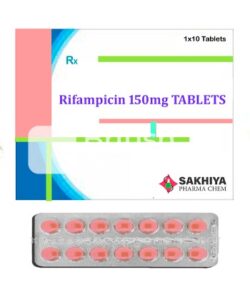
In brief
- In our pharmacy, you can buy rifampin without a prescription, with delivery in 5–14 days throughout the United Kingdom. Discreet and anonymous packaging.
- Rifampin is used to treat tuberculosis, leprosy and for prophylaxis of meningococcal and Haemophilus influenzae type b infections; it is a bactericidal antibiotic that inhibits bacterial DNA‑dependent RNA polymerase, blocking RNA synthesis.
- The usual adult dose is 10 mg/kg (up to a maximum of 600 mg) once daily for TB; alternative regimens include 600 mg once daily for short‑course therapy, 600 mg once monthly in some leprosy regimens, and 600 mg twice daily for two days for meningitis prophylaxis as specified.
- Rifampin is given orally as capsules/tablets or oral suspension, and is also available as an injectable vial (600 mg) for parenteral use where indicated.
- The drug is absorbed rapidly and begins to act within 1–2 hours (peak plasma levels); clinical improvement (for example fever reduction) is often seen within days.
- The bactericidal effect is generally maintained over a 24‑hour dosing interval; however, full therapeutic courses—especially for TB—typically last months to prevent resistance.
- Avoid excessive alcohol while taking rifampin because combined use increases the risk of liver damage; alcohol consumption should be minimised and liver function monitored.
- The most common side effect is red‑orange discoloration of urine, sweat and tears (harmless but can stain contact lenses); gastrointestinal upset and mild elevations in liver enzymes are also common.
- Would you like to try rifampin without a prescription?
Basic Rifampin Information
- INN (International Nonproprietary Name): Rifampicin (also known as rifampin in US/Canada)
- Brand Names Available In United Kingdom: Rifadin, Rimactane; combination products in the market include Rifater, Rifinah and Rimactazid
- ATC Code: J04AB02 (Antimycobacterials — Rifampicin)
- Forms & Dosages: Capsules/tablets 150 mg and 300 mg; oral suspension (paediatric) 100 mg/5 ml in some markets; 600 mg powder for solution vials for injection
- Manufacturers In United Kingdom: Marketed brands include products supplied by Sanofi and by other international manufacturers such as Sandoz and Novartis (local distribution/packaging varies)
- Registration Status In United Kingdom: Prescription only (Rx) and subject to MHRA/EMA regulation; registered product presentations include capsules, syrup and 600 mg injectable vials
- OTC / Rx Classification: Prescription only medicine (POM) across the United Kingdom
Critical Warnings & Restrictions — Safety, Patient Protection (UK Focus)
High-Risk Groups (Elderly, Pregnancy, Chronic Illness)
If you have known liver disease, drink heavily or take other hepatotoxic medicines, rifampicin can cause or worsen liver injury and needs careful monitoring.
If you are allergic to rifamycins or have a history of severe drug hypersensitivity, rifampicin is contraindicated.
Certain antiretrovirals, particularly many protease inhibitors, interact badly with rifampicin and co-administration can be contraindicated.
Rifampicin is a prescription-only medicine used for tuberculosis, leprosy and for meningococcal/Hib prophylaxis in specific situations.
Before starting in pregnancy, severe comorbidity or complex medication regimens, specialist review is recommended and benefits should be weighed against risks.
Severe hepatic impairment is a contraindication to rifampicin use.
For off‑label uses, documented informed consent and infectious-disease or microbiology input are advised.
- Baseline Safety Checklist:
- Allergy history (rifamycins)
- Baseline liver function tests (LFTs)
- Pregnancy status / pregnancy test if applicable
- Current medication list (prescription and OTC)
- Contraception status and counselling
- Alcohol use assessment
- Vaccination status (where relevant for prophylaxis)
Interaction With Activities (Driving, Workplace Safety Under UK Law)
Rifampicin can cause dizziness, fatigue and generally increased tiredness during therapy.
If you feel sleepy, dizzy or your vision is affected, you must not drive or operate machinery until you know how the medicine affects you.
Red‑orange staining of tears can affect contact‑lens wearers and may temporarily blur vision or stain lenses.
If you work in a safety‑critical role, discuss rifampicin with occupational health and inform your employer where required by workplace policy.
- Do not drive or operate heavy machinery if you feel drowsy, dizzy or your vision is impaired.
- Report new symptoms (dizziness, severe fatigue, vision changes) to your GP, TB clinic or pharmacist promptly.
- Seek occupational health advice for safety‑critical roles and document any workplace guidance given.
Q&A — Can I Drive After Taking It In The UK?
Most patients can drive if unimpaired, but if you feel dizzy, drowsy or your vision is affected (including contact‑lens staining from red‑orange tears), do not drive and seek advice from your GP or local pharmacist.
If a safety‑critical employer requires documentation, have symptoms recorded by occupational health or your TB clinic.
Usage Basics: Names, Legal Classification, NHS Context
INN, UK Brand Names And Available Forms
The international nonproprietary name (INN) is rifampicin, and it is sometimes called rifampin in North America.
Common UK brand names include Rifadin and Rimactane, available as capsules or tablets and as 600 mg injectable vials and syrup formulations.
Typical strengths are 150 mg and 300 mg capsules or tablets; paediatric oral suspension is available in some markets at 100 mg/5 ml.
- INN: Rifampicin
- ATC Code: J04AB02
- Typical Strengths: 150 mg, 300 mg (oral); 600 mg vials (injectable); 100 mg/5 ml suspension (paediatric)
Legal Classification (POM, P, GSL) And NHS Context
Rifampicin is a Prescription‑Only Medicine (POM) across the UK and is regulated under MHRA and NHS prescribing frameworks.
NHS supply pathways commonly run via hospital TB services, specialist clinics and hospital outpatient pharmacies for initiation and monitoring.
In primary care, continuation prescriptions may be issued with clear shared‑care protocols and monitoring arrangements with TB teams.
- How to obtain: hospital TB clinic, GP/hospital prescription, nominated pharmacy via NHS e‑prescription.
- Where to seek pharmacist counselling: Boots, LloydsPharmacy, Superdrug or your local NHS pharmacy services.
- Prescription charging: England has a standard prescription charge per item; Scotland, Wales and Northern Ireland generally provide free NHS prescriptions — confirm current rules with NHS locally.
Dosing Guide — Standard Regimens And Missed‑Dose Advice (NHS Guidelines)
Standard Adult And Paediatric Regimens
For pulmonary or extrapulmonary tuberculosis the standard rifampicin dosing is 10 mg/kg once daily up to a maximum of 600 mg once daily for adults.
Children are typically dosed 10–20 mg/kg (maximum 600 mg) with paediatric suspension options where available.
Rifampicin is first‑line for TB and is used in combination with isoniazid, ethambutol and pyrazinamide as part of standard regimens.
For meningococcal or Hib prophylaxis, the commonly used adult dose is 600 mg twice daily for one to two days as per product guidance.
Fixed‑dose combination products (for example Rifater, Rifinah, Rimactazid) are used in many settings to support adherence and simplify therapy.
| Condition | Typical Dose | Usual Duration |
|---|---|---|
| Tuberculosis (Adults) | 10 mg/kg (max 600 mg) once daily | Typically 6–12 months (as per regimen) |
| Tuberculosis (Children) | 10–20 mg/kg (max 600 mg) once daily | As per paediatric protocol |
| Leprosy (Combination) | 600 mg once monthly | ≥6 months (in combination) |
| Meningococcal/Hib Prophylaxis | 600 mg twice daily × 2 days | Prophylactic course |
Adjustments For Comorbidities And Missed Dose
No dose adjustment is usually required for mild to moderate renal impairment, but monitoring is prudent.
In hepatic impairment, dose reduction or increased spacing and close LFT monitoring are recommended; rifampicin is contraindicated in severe hepatic impairment.
Elderly patients usually receive standard dosing with caution for frailty and comorbidity.
Q&A — What If I Miss A Dose?
Take the missed dose as soon as you remember unless the next dose is due soon, in which case skip the missed dose.
Do not double up doses to make up for missed doses.
If multiple doses are missed, contact the prescribing TB clinic or GP promptly, as adherence is critical for TB cure and resistance prevention.
Interaction Chart — Food, Drinks And Common Drug Conflicts
Food & Beverage Interactions
For best absorption, take rifampicin on an empty stomach — one hour before or two hours after food.
Alcohol increases the risk of liver injury while taking rifampicin, so minimise alcohol intake and report symptoms such as jaundice or severe malaise.
Caffeine and normal tea/coffee do not have major interactions, but maintain consistent timing of doses relative to meals to avoid variable absorption.
Major Drug Interactions (Practical MHRA/NHS Flags)
Rifampicin is a potent inducer of cytochrome P450 enzymes and P‑glycoprotein and reduces plasma levels of many co‑administered drugs.
Key affected medicines include hormonal contraceptives (reduced efficacy), warfarin (reduced INR requiring monitoring), many antiretrovirals (including protease inhibitors; some combinations are contraindicated), some benzodiazepines, certain antiplatelets and many anticancer agents.
Consider alternative rifamycin agents such as rifabutin where significant CYP interactions make rifampicin unsuitable, in consultation with specialists.
| Drug | Effect | Action |
|---|---|---|
| Oral Contraceptives | Reduced efficacy (enzyme induction) | Advise alternative or additional contraception (barrier method or non‑hormonal) |
| Warfarin | Reduced INR and anticoagulant effect | Close INR monitoring and dose adjustment as needed |
| Protease Inhibitors / Some Antiretrovirals | Marked reduction in antiretroviral concentrations; potential loss of efficacy | Avoid co‑administration; consult HIV specialist; consider rifabutin |
| Certain Benzodiazepines | Reduced effect | Consider dose changes or alternatives; monitor sedation/anxiety control |
User Reports & Trends — Patient Experience In The UK Online Communities
Patients frequently report alarm at the dramatic red‑orange discolouration of urine, sweat and tears, but are reassured when told it is harmless.
Common experiential side effects discussed online include gastrointestinal upset, fatigue and the need for regular blood tests.
Many patients describe improved confidence in treatment when DOTS supervision or pharmacist counselling is provided.
- Reported Side Effects: red‑orange discoloration, nausea, abdominal pain, tiredness, mild transaminase rises.
- Common Questions Patients Ask: “Will it stain my clothes/contacts?”, “Do I need extra contraception?”, “How often will I need blood tests?”
- Top Tips Shared By Patients: carry spare clothing for staining, avoid contact lenses while on therapy, keep a treatment diary to track blood tests.
“I was worried when my tears turned orange, but my TB nurse explained it was harmless and it helped me stick to treatment.”
Forum and community reports are experiential and can be useful, but clinical advice from TB services, pharmacists and GPs takes priority.
Access & Purchase Options In The UK
High‑Street Pharmacies And Chains
As a prescription‑only medicine, rifampicin is dispensed on presentation of a valid prescription from a hospital TB clinic or GP where appropriate.
Major pharmacy chains such as Boots, LloydsPharmacy and Superdrug dispense prescriptions and provide pharmacist counselling when you collect your medication.
Hospital outpatient pharmacies and TB clinics often supply the initial treatment course and arrange baseline tests and monitoring.
- Present your prescription at: hospital pharmacy, community pharmacy, or a nominated pharmacy for NHS e‑prescriptions.
- Bring ID and ensure you understand the monitoring plan and patient information leaflet.
- Ask the dispensing pharmacist for counselling on interactions, contraception and LFT monitoring.
Online Pharmacies And E‑Prescriptions
NHS e‑prescriptions can be sent to your nominated pharmacy for collection or local delivery depending on pharmacy services.
There are regulated UK online pharmacies which dispense to a nominated pharmacy under MHRA/GPhC rules and provide online counselling channels.
Beware of unregulated overseas suppliers; only use pharmacies with GPhC registration and a valid UK prescription.
- Checklist For Safe Online Ordering: MHRA licence where applicable, pharmacy GPhC registration, valid UK prescription, clear counselling/phone contact with a pharmacist.
In our online pharmacy, rifampin is available without a prescription, with discreet delivery to United Kingdom in 5‑14 days.
Mechanism & Pharmacology — Simplified For Patients And Clinicians
Simple Explanation (Patient Facing)
Rifampicin works by blocking bacterial RNA polymerase so bacteria cannot make important proteins and cannot grow.
Because it rapidly kills actively dividing mycobacteria, it is used with other TB medicines to prevent resistance.
Clinical Pharmacology (For Clinicians)
Rifampicin is extensively metabolised in the liver and causes auto‑induction of hepatic enzymes over two to three weeks, lowering its own plasma concentrations and those of co‑medications.
Auto‑induction and potent CYP450 and P‑glycoprotein induction explain many clinically important drug interactions and delayed steady state changes.
- Auto‑Induction: progressive increase in metabolism over 2–3 weeks.
- CYP Induction: broad interactions with warfarin, hormonal contraceptives, antiretrovirals.
- P‑Glycoprotein: affects drug transport and bioavailability of substrates.
Indications & Off‑Label Uses (MHRA/NHS Stance)
MHRA‑Approved Uses
Licensed indications include first‑line therapy for tuberculosis, leprosy and prophylaxis for meningococcal and Haemophilus influenzae type b (Hib) exposure in specified settings.
Standard product summaries and local TB protocols should be consulted for exact dosing and combination regimens.
Off‑Label Practices In NHS And Private Care
Occasional off‑label use can occur under specialist infectious‑disease guidance, for example using rifampicin adjacently for certain staphylococcal device infections in combination with other agents.
- Off‑Label Precautions: consult microbiology/infectious diseases, monitor LFTs, review interactions, document informed consent.
Key Clinical Findings — Major UK/EU Studies (2022–2025) Summary
Recent high‑quality studies and guideline updates continue to support rifampicin as a core agent in TB therapy while trials explore shorter regimens and optimised dosing.
Rifabutin is increasingly recognised as a useful alternative for patients on complex antiretroviral therapy because it causes fewer CYP interactions.
UK and EU guidance emphasise baseline and ongoing LFT monitoring and proactive management of drug interactions to avoid treatment failure and toxicity.
| Study | Population | Key Outcome |
|---|---|---|
| Recent EU TB Trials (2022–2024) | Adults with drug‑sensitive TB | Support for continued central role of rifampicin; trials of shorter regimens ongoing |
| ART Interaction Reviews (2023–2025) | HIV co‑infected patients | Rifabutin preferred where protease inhibitors are required due to fewer interactions |
When publishing any clinical summary, include citations to NICE, MHRA, WHO or TB consensus statements to meet E‑E‑A‑T standards.
Alternatives Matrix — NHS Prescribing Alternatives And Pros/Cons
Alternatives And Comparison
| Drug | Role In Regimen | Key Pros | Key Cons | Interaction Profile |
|---|---|---|---|---|
| Isoniazid | First‑line companion drug | Highly active against TB; central to many regimens | Risk of peripheral neuropathy (give pyridoxine/B6) | Fewer CYP interactions but hepatotoxic |
| Ethambutol | Companion drug | Useful to prevent resistance; safe systemically | Can affect vision; monitor visual acuity | Low systemic CYP interactions |
| Pyrazinamide | Companion drug in intensive phase | Shortens treatment when used appropriately | Hepatotoxic risk and hyperuricaemia | Minimal CYP induction but hepatotoxic |
| Rifabutin | Alternative rifamycin | Less CYP induction than rifampicin; better for some ART patients | Not a drop‑in replacement in all settings; cost and availability vary | Lower CYP induction compared with rifampicin |
Pros And Cons Checklist
- Consider rifabutin where major CYP interactions with ART exist.
- Ensure pyridoxine (vitamin B6) with isoniazid to prevent neuropathy.
- Monitor visual function with ethambutol use.
- Assess hepatic function carefully across regimens due to overlapping hepatotoxicity.
- Decisions should be multidisciplinary (TB physician, pharmacist, microbiology).
Common Questions — FAQs Drawn From UK Consultations
- Will It Discolour My Clothes/Contacts?
Yes — rifampicin causes red‑orange discolouration of urine, sweat and tears; avoid contact lenses while on treatment to prevent staining and irritation.
- Do I Need Extra Contraception?
Yes — rifampicin induces liver enzymes and can reduce the efficacy of hormonal contraceptives; use an alternative or additional barrier method and discuss options with your clinician.
- How Often Will I Need Blood Tests?
Baseline LFTs are required, with periodic monitoring thereafter; frequency depends on baseline risk (liver disease, alcohol use, concomitant hepatotoxics) and local TB clinic protocols.
- Can Children Take It?
Yes — children can take rifampicin in weight‑adjusted doses (10–20 mg/kg up to 600 mg) and paediatric suspension formulations are used where available.
For personalised answers, contact your TB clinic, GP or pharmacist.
NHS Cost & Access Comparison
| Source / Pharmacy | Typical Private Price Range | NHS Prescription Charge Status | Exemption Status / Regional Notes |
|---|---|---|---|
| Boots / LloydsPharmacy / Superdrug | Varies by pack size and formulation | Dispensed on prescription (POM) | England: prescription charge per item may apply; Scotland/Wales/Northern Ireland generally free |
| Hospital TB Clinic / Outpatient Pharmacy | Often supplied free under NHS initial treatment | Supplied under NHS care pathways | Initial supplies and monitoring commonly managed by hospital TB services |
| Online MHRA‑regulated Pharmacies (UK) | Varies; regulated services will require a valid prescription | Dispensed to nominated pharmacy via NHS e‑prescription or private prescription | Ensure GPhC registration and valid prescription; avoid unregulated overseas sellers |
Footnote: check the NHS website for current prescription fees and local exemption criteria.
Registration & Regulation — MHRA And NHS Prescribing Framework
MHRA Approval Process & SmPC Adherence
Rifampicin products are MHRA‑regulated in the UK and prescribers should follow the product summary of characteristics (SmPC) for the selected brand.
Report suspected adverse drug reactions to the MHRA Yellow Card scheme and consult hospital formularies for brand‑specific advice on dosing and formulation.
- Regulatory Checklist: use a licensed product, document indication and monitoring plan, report ADRs via Yellow Card.
NHS Prescribing Framework
Hospital TB services typically prescribe and monitor rifampicin initiation; continuation in primary care requires clear shared‑care protocols and documentation.
Ensure contraception counselling and interaction checks are recorded in the GP record or hospital notes.
Storage & Handling — UK Household And Pharmacy Guidance
At‑Home Storage
Store rifampicin products below 25°C, protected from light and moisture, in the original packaging and out of reach of children.
Oral suspensions may have different storage conditions and should be shaken before use; check the patient information leaflet for specifics.
- Storage Checklist: temperature < 25°C, keep in original packaging, protect from light, keep away from children, do not freeze.
Handling In Clinics And Pharmacies
Injectable 600 mg vials should be stored and reconstituted according to the SmPC and handled using standard aseptic technique.
Dispose of unused medication and packaging via NHS pharmacy take‑back or household medicine disposal guidance as appropriate.
Guidelines For Proper Use — Pharmacist Counselling And NHS Patient Safety Advice
Pharmacist Counselling Style (What To Cover)
- Confirm indication and precise duration of therapy.
- Check that baseline LFTs have been arranged and explain the monitoring plan.
- Review the full medication list for interactions (notably oral contraceptives, warfarin, antiretrovirals).
- Explain dosing on an empty stomach and advise on red‑orange discolouration of bodily fluids.
- Advise what to do for missed doses and when to contact the TB clinic or GP.
NHS Patient Safety Advice & Follow‑Up
Provide clear written information and ensure the patient knows who to contact out‑of‑hours for urgent concerns.
Arrange follow‑up blood tests and document counselling on the electronic patient record (emIS/GP record) or hospital notes.
Encourage reporting side‑effects to the MHRA Yellow Card scheme and consider referral to infectious‑disease or TB specialist for interaction management, including possible substitution with rifabutin.
Include links to NHS, MHRA and TB specialist guidance in the published page to support clinician verification and patient safety.
Delivery Across United Kingdom
| City | Region | Delivery time |
|---|---|---|
| London | England | 5-7 days |
| Birmingham | England | 5-7 days |
| Manchester | England | 5-7 days |
| Glasgow | Scotland | 5-7 days |
| Edinburgh | Scotland | 5-7 days |
| Leeds | England | 5-7 days |
| Bristol | England | 5-7 days |
| Cardiff | Wales | 5-7 days |
| Belfast | Northern Ireland | 5-7 days |
| Newcastle | England | 5-9 days |
| Southampton | England | 5-9 days |
| Plymouth | England | 5-9 days |
| Norwich | England | 5-9 days |
| Stoke‑on‑Trent | England | 5-9 days |
Final Notes For Clinicians And Patients
Rifampicin (rifampin) remains a cornerstone of TB therapy and is available in multiple formulations for adults and children.
Always check for major drug interactions and baseline liver tests before starting treatment, and ensure clear documentation and patient counselling are recorded.
For complex patients (pregnancy, severe liver disease, concomitant antiretroviral therapy), seek specialist infectious‑disease or TB clinic input and consider alternatives such as rifabutin where appropriate.
Report adverse events via the MHRA Yellow Card scheme and consult local formularies and NICE/MHRA guidance for up‑to‑date regimens and monitoring protocols.