Domperidone
In brief
- Domperidone is available from pharmacies in many countries, and in some places it may be purchased without a prescription; however, in the UK and many other regions it is generally prescription-only or restricted due to cardiac safety concerns.
- Domperidone is used to relieve nausea and vomiting and to help with symptoms of dyspepsia and delayed gastric emptying. It works mainly by blocking dopamine D2 receptors in the gut and in the chemoreceptor trigger zone, which helps improve stomach motility and reduce the feeling of sickness.
- The usual adult dose is 10 mg up to three times daily, before meals; doses should be kept as low as possible and for the shortest possible duration. For children over 12 years or over 35 kg, dosing is only used under medical advice.
- It is most commonly taken as a tablet, oral suspension, or oral drops. In some countries, suppositories are also available.
- Domperidone usually starts working within about 30 to 60 minutes after taking a dose.
- The duration of action is typically around 4 to 6 hours.
- Alcohol is best avoided, as it may worsen dizziness, drowsiness, and stomach-related symptoms.
- The most common side effects include dry mouth, headache, abdominal cramps, and diarrhoea; less commonly, it may cause palpitations or other heart rhythm problems.
- Would you like to try domperidone without a prescription?
Critical Warnings & Restrictions In The UK
- Domperidone is a prescription-only medicine in the UK and is restricted by the MHRA because of cardiac risk.
- It should only be used when the expected benefits outweigh the risks, at the lowest effective dose and for the shortest possible duration.
- The ATC code is A03FA03.
- UK forms sold include 10 mg tablets and 1 mg/mL oral suspension.
People with heart disease, a prolonged QT interval, electrolyte imbalance, liver impairment, older age, or medicines that interact with domperidone need extra caution.
Pregnancy and breastfeeding should only be discussed with a clinician before use.
If someone takes domperidone and then develops any warning sign, urgent help is needed straight away.
- Palpitations.
- Fainting.
- Chest pain.
- Severe dizziness.
High-Risk Groups
An elderly patient with heart disease, or someone on several regular medicines, is exactly the sort of person a pharmacist would want a prescriber to review first.
That also applies to chronic illness, liver problems, or any history of fainting without a clear explanation.
Interaction With Activities Such As Driving And Workplace Safety Under UK Law
Most people want a simple answer before getting behind the wheel or starting a shift.
Domperidone can affect how some people feel, especially if dizziness develops, so safety comes first under UK workplace and road safety expectations.
Can I Drive After Taking It In The UK?
Only if you feel well, alert, and free from dizziness or faintness.
If the medicine makes you feel unsteady, do not drive, use machinery, or do anything that could put you or others at risk until you have spoken to a pharmacist or prescriber.
Basic Domperidone Information
- INN (International Nonproprietary Name): Domperidone
- Brand names available in United Kingdom: Motilium, generic domperidone products depending on supply and prescription
- ATC Code: A03FA03
- Forms & dosages: 10 mg tablets, 1 mg/mL oral suspension, 1 mg/mL oral drops
- Manufacturers in United Kingdom: Janssen-Cilag, Teva Pharma, Sandoz, Sanofi, and other listed suppliers depending on availability
- Registration status in United Kingdom: Prescription Only (Rx)
- OTC / Rx classification: Prescription Only (Rx) in most countries
What Domperidone Is And How It Is Classified
Domperidone is the medicine many people search for when they type Domperidone UK, Motilium UK, or Domperidone 10mg into a search engine.
It is an antiemetic and gastroprokinetic medicine, used for specific digestive symptoms where a prescriber decides it is suitable.
The international nonproprietary name, or INN, is simply Domperidone.
The ATC code A03FA03 places it in drugs for functional gastrointestinal disorders, specifically peristaltic stimulants and antiemetics.
INN, Brand Names Available In The UK
Globally, the best-known brand is Motilium, while UK supply may include branded and generic versions depending on availability and prescription.
What The Classification Means For Patients
For patients, the classification matters because it tells you this is not a casual self-care medicine.
It is used for defined symptoms, with professional oversight, and not as a general remedy for every stomach complaint.
UK Legal Status, Prescription Rules And MHRA Restrictions
Many people assume domperidone is bought over the counter because it is familiar, but that is not the case in the UK.
It is usually supplied on prescription, and UK prescribers must follow MHRA advice on indication, dose, and duration.
Access may be through a GP, a hospital clinician, or a private prescriber, and pharmacists often play an important role in checking interactions and counselling on safe use.
- Who can prescribe: GP, hospital doctor, or private prescriber.
- Where it may be dispensed: community pharmacy, hospital pharmacy, or an approved online pharmacy.
- Why it is restricted: cardiac risk, especially when used in higher-risk patients or alongside interacting medicines.
In Europe and Canada, domperidone is also prescription-only and restricted or monitored, while in the USA it is not approved for routine use.
That comparison matters because UK patients sometimes see foreign websites offering Motilium prescription or similar products, but UK safety rules still apply.
Legal Classification In The UK
In regulatory terms, the UK status is Prescription Only (Rx).
That means a pharmacist should treat it as a medicine needing oversight, not a general retail item.
How MHRA Restrictions Affect Repeat Prescriptions
Repeat prescribing should not become automatic.
If symptoms keep returning, the underlying cause needs review rather than simply extending treatment.
A short course may be appropriate, but long-term use runs against the safety approach set by MHRA restrictions.
Standard Dosing In UK Practice
People often want the exact dose first, especially when they have been given Motilium 10mg or another domperidone product for nausea.
In UK practice, a typical adult regimen is often 10 mg up to three times daily, but the key safety rule is to keep the course short and use the lowest effective dose.
Children need particular care, and use should be specialist-led or carefully assessed by age, weight, and local guidance.
| Group | Typical UK Approach | Notes |
|---|---|---|
| Adults | 10 mg up to three times daily | Use the lowest effective dose for the shortest possible duration. |
| Children | Limited use only | Specialist-led or carefully assessed by age and weight. |
Dosage form can make a real difference.
Tablets suit many adults, while oral suspension or oral drops are often more practical for people who struggle to swallow.
Standard Regimens In NHS-Style Practice
Domperidone tablets, oral suspension, and oral drops are all forms sold internationally, including Motilium 10mg tablets and 1 mg/mL liquids.
Exact dose adjustments may be needed if someone has liver problems, is older, or takes other medicines that change risk.
Adjustments For Comorbidities And Liver Problems
Liver impairment is a major reason for caution.
Any co-existing heart problem, fainting history, or electrolyte disturbance should also prompt prescriber review before treatment starts.
What If I Miss A Dose?
Take the missed dose when you remember, unless it is nearly time for the next one.
Do not double up to make up for a missed tablet or spoonful.
How To Take Domperidone Safely
People usually want a simple rule they can follow on a busy day.
Take domperidone exactly as prescribed, and do not take extra doses because the nausea is hanging around.
A patient collecting medicine on a Friday evening, for example, should still stick to the label rather than guessing.
- Follow the prescription label exactly.
- Do not double a dose if one is missed.
- Use the right form for you, whether tablet, suspension, or drops.
- Ask a pharmacist if symptoms are not improving.
Tablets are common, but oral suspension and oral drops are helpful for people who find swallowing difficult.
Some supply sources also mention orodispersible formats such as Motilium Instants, but the form supplied in the UK depends on prescription and availability.
Taking The Medicine Correctly
Swallow tablets as directed.
Shake liquids if instructed on the pack, and measure them carefully with the correct device.
When To Seek Review Instead Of Continuing
If symptoms persist, keep returning, or worsen, that is a reason to stop and ask for review rather than simply continuing indefinitely.
Ongoing vomiting, unexplained pain, or repeated need for antiemetics may point to something that needs proper assessment.
Common Uses: Approved Indications And Real-World UK Practice
What is domperidone actually for?
In practice, it is mainly used for nausea and vomiting and for some upper gastrointestinal symptoms linked with delayed gastric emptying.
UK use should stay within authorised or clinically justified prescribing, with caution not to overstate benefit for reflux unless a clinician has specifically advised it.
- Common approved or accepted uses: nausea and vomiting, selected upper gastrointestinal symptoms linked to delayed gastric emptying.
- Off-label requests: reflux self-treatment, long-term digestive discomfort, repeated use without review.
European authorisation is generally short-course and mainly for nausea and vomiting, and the UK remains more restrictive.
That is why Domperidone prescription requests should always be tied to a clear clinical reason.
MHRA-Approved Or Commonly Accepted Uses
Where it is used, the aim is symptom relief and better gastric movement, not a cure for the underlying illness.
Off-Label Use In NHS And Private Care
Off-label prescribing can happen, but it should be deliberate and documented, with the benefit-risk balance thought through first.
How Domperidone Works
In plain English, domperidone helps the stomach empty more efficiently and can reduce the nausea signals that make people feel sick.
That is why it sits in the antiemetic and prokinetic group under A03FA03.
| Patient-Friendly Explanation | Clinical Term |
|---|---|
| Helps the stomach move food on more normally | Prokinetic effect |
| Helps reduce the feeling of sickness | Dopamine D2 receptor antagonist |
Simplified Explanation
When the stomach is sluggish, food and fluid can sit there longer than they should, and that can contribute to nausea.
Domperidone helps nudge that movement along.
Clinical Terms For Accurate Understanding
The practical pharmacology is dopamine D2 receptor antagonism with a prokinetic effect.
That clinical description is useful for prescribers because it links the medicine to both symptom relief and safety considerations.
Drug, Food And Drink Interactions
This is the part that matters most for safety.
Domperidone can interact with medicines that affect heart rhythm or raise domperidone levels, and that is exactly why MHRA restrictions focus on cardiac risk.
Some combinations increase the chance of dangerous rhythm problems, so it is essential to check a medicine list before starting.
| Interaction Category | Why It Matters |
|---|---|
| Macrolide antibiotics | May increase risk by affecting rhythm or domperidone levels. |
| Azole antifungals | Can increase domperidone exposure and risk. |
| Some antidepressants | May add to QT risk in susceptible people. |
| Antiarrhythmics | Can compound heart rhythm problems. |
| Other QT-prolonging medicines | Risk may stack when several medicines are used together. |
Food And Drinks, Including Alcohol
Alcohol should be approached cautiously because it can make someone feel more unwell and may worsen dizziness.
Tea and coffee do not have a known direct interaction, but they can aggravate stomach symptoms in some people.
Common Drug Conflicts And Why They Matter
If a patient is already taking antibiotics, antifungals, or medicine for heart rhythm problems, a pharmacist should check the combination before domperidone is taken.
If in doubt, report side effects through the Yellow Card scheme and ask for advice promptly.
Can I Take Domperidone With Antibiotics?
Sometimes no, sometimes only after a pharmacist or prescriber checks the exact antibiotic.
That is because some antibiotics are among the medicines that can raise cardiac risk when combined with domperidone.
Side Effects And Warning Signs To Act On
Most people ask first about the common side effects, and then about the serious ones.
Typical side effects include dry mouth, headache, abdominal cramps, and diarrhoea.
Common Side Effects
- Dry mouth.
- Headache.
- Abdominal cramps.
- Diarrhoea.
These effects are often mild, but they still matter if they make the medicine unpleasant to take.
Serious Symptoms And Emergency Advice
Heart-related warning signs must be taken seriously in UK patients because the MHRA restriction is linked to cardiac risk.
- Palpitations.
- Fainting.
- Chest pain.
- Severe dizziness.
Seek urgent help if any of those happen after taking domperidone.
If the person feels generally unwell, does not look right, or is getting worse, do not wait it out.
Who Should Avoid Domperidone Or Use It With Caution
Some people need a prescriber to check the risks before treatment is even started.
That includes people with heart rhythm problems, significant liver disease, interacting medicines, or unexplained fainting or palpitations.
High-Risk Groups
- People with heart disease or prolonged QT.
- People with electrolyte imbalance.
- People with liver impairment.
- Older adults.
- People taking interacting medicines.
- Pregnant or breastfeeding patients, unless a clinician has advised use.
In international markets such as Canada and across Europe, the same cautious approach is used because the cardiac concerns are well recognised.
When An Alternative May Be Safer
If the person has a history of rhythm problems or cannot avoid a strong interacting medicine, another option may be safer.
A clinician should decide that, not guesswork from a website or a friend’s experience.
Ask a prescriber before taking if… you have heart disease, liver problems, fainting, palpitations, low potassium or magnesium, are older, or take regular medicines for infection or rhythm control.
UK Access Routes: GP, Pharmacy And Online Prescriptions
In the UK, domperidone is usually accessed through a GP, hospital clinician, or private prescriber.
Community pharmacies such as Boots, LloydsPharmacy, Superdrug, and independent pharmacies may dispense it when a valid prescription is supplied.
Regulated online pharmacies have grown quickly because many patients prefer a discreet service and home delivery.
- NHS route: prescribed by a GP or hospital clinician and dispensed by a pharmacy.
- Private route: assessment and prescription from a private prescriber.
- Online route: regulated pharmacy supply with pharmacist review and delivery.
International brand names such as Motilium, Domstal, Peridys, and Digesan may appear in product discussions, but UK supply still depends on prescription and local availability.
In our online pharmacy, domperidone is available without a prescription, with discreet delivery to United Kingdom in 5-14 days.
Boots, LloydsPharmacy, Superdrug And Independents
These pharmacies are familiar to most UK patients and remain the usual place to collect medicines after a prescription has been issued.
Online Pharmacies And NHS E-Prescriptions
E-prescriptions make the process simpler when a clinician has already decided treatment is appropriate.
Pharmacist counselling is especially important in the UK because the medicine carries a specific cardiac safety focus.
Brand Names, Pack Sizes And International Variants
Brand names can be confusing when the same medicine appears under different labels in different countries.
That is why a patient may hear Motilium at home, Domstal abroad, and a plain generic label in the UK.
| Brand Name | Region | Dosage Form |
|---|---|---|
| Motilium | Global / Multiple | 10 mg tablets, 1 mg/mL oral suspension |
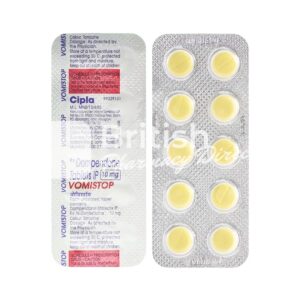
| Domstal, Vomistop, Emidon | India, Asia, Africa | 10 mg tablets, 1 mg/mL oral drops, 1 mg/mL suspension |
| Peridys, Domecid | Parts of Europe | 10 mg tablets, suspensions, oral solutions |
| Digesan, Inversion | Latin America | Tablets, suspensions |
Brand Names And Packaging
Typical UK-relevant strengths are 10 mg tablets, 1 mg/mL suspension, and 1 mg/mL oral drops.
Tablets, Suspension And Drops
Tables packs, amber bottles, and dropper bottles may all be seen depending on the country and manufacturer.
Alternatives To Domperidone In NHS Care
Not every patient is best treated with domperidone.
The safer option depends on why the medicine is needed, the person’s age, comorbidities, and cardiac risk.
| Option | Typical Use | Key Point |
|---|---|---|
| Domperidone | Nausea and selected gastric symptoms | Restricted because of cardiac risk. |
| Other antiemetics | Different nausea or vomiting causes | Choice depends on the clinical situation. |
| Gastrointestinal medicines | Specific upper GI complaints | May be better suited to the underlying problem. |
NHS Prescribing Alternatives
Some alternatives may be preferred when heart rhythm risk is high or a medicine interaction cannot be avoided.
Choosing A Safer Option For Specific Patients
- Pros of domperidone: targeted use for nausea and certain gastric symptoms.
- Cons of domperidone: cardiac risk, interaction concerns, restricted UK use.
That balance is why a prescriber should be involved rather than relying on past experience with Motilium tablets or a repeated Motilium prescription.
Storage, Handling And Disposal At Home
Keep domperidone at room temperature, away from damp bathrooms, direct heat, and children.
That advice applies to tablets, oral suspension, and oral drops.
- Store in the original pack.
- Keep away from moisture and heat.
- Check expiry dates regularly.
- Return unused medicine to a pharmacy.
Packaging may be blisters or amber bottles, so it is worth keeping the label readable.
UK Household Storage In Damp Climates
A cupboard outside the bathroom is usually better than a steamy shelf near the shower.
Disposal Through Pharmacies
Unused or expired medicine should be handed back to a pharmacy rather than binned or flushed.
UK Patient Questions And Practical Counselling Points
Patients often ask the same few questions in the pharmacy counter queue.
Here are the practical answers that usually help.
UK Pharmacist Counselling Style
Q: How quickly does it start working?
Some people feel improvement fairly quickly, but if the nausea is severe or ongoing, further review may be needed.
Q: Can I take it long term?
Long-term use is not the normal UK approach because treatment should be short and carefully justified.
Q: What if symptoms come back?
If symptoms return after finishing the course, speak to a pharmacist or GP rather than restarting on your own.
Q: When should I seek help?
Any palpitations, fainting, chest pain, or severe dizziness means urgent help is needed.
NHS Patient Safety Advice
Ask your pharmacist if… you are taking antibiotics, antifungals, antidepressants, heart medicines, or any other regular prescription.
It is also sensible to ask if you are looking for Domperidone 10mg, Motilium tablets, or a Motilium prescription and want to know whether it is suitable for you.
Delivery Across United Kingdom
| City | Region | Delivery Time |
|---|---|---|
| London | England | 5-7 days |
| Birmingham | England | 5-7 days |
| Manchester | England | 5-7 days |
| Leeds | England | 5-7 days |
| Liverpool | England | 5-7 days |
| Sheffield | England | 5-7 days |
| Bristol | England | 5-7 days |
| Newcastle upon Tyne | England | 5-7 days |
| Nottingham | England | 5-9 days |
| Leicester | England | 5-9 days |
| Coventry | England | 5-9 days |
| Cardiff | Wales | 5-7 days |
| Swansea | Wales | 5-9 days |
| Glasgow | Scotland | 5-7 days |
| Edinburgh | Scotland | 5-7 days |