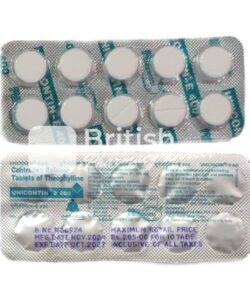
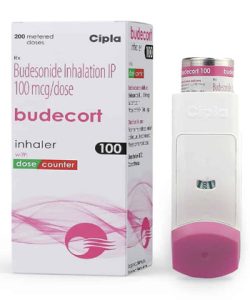
Budecort
In brief
- In our pharmacy, you can buy budecort without a prescription, with delivery in 3–14 days throughout the United Kingdom. Discreet and anonymous packaging available.
- Budecort (budesonide) is used for maintenance treatment of asthma, as part of COPD therapy, for allergic rhinitis (nasal spray), and for local treatment of inflammatory bowel disease (enteric‑coated capsules, rectal foam). It is a corticosteroid that acts as a glucocorticoid receptor agonist, reducing airway and mucosal inflammation and immune activity with predominantly local effects.
- Usual doses vary by condition: inhaled asthma maintenance 200–800 μg/day (divided doses); COPD regimens 200–1,600 μg/day as part of combination therapy; Crohn’s (Entocort) 9 mg once daily for about 8 weeks; nasal spray typically 64 μg per nostril once or twice daily; rectal foam 2 mg once or twice daily.
- Forms of administration include pressurised inhaler (pMDI), dry powder inhaler, nebuliser respules/nebules, enteric‑coated oral capsules, rectal foam/enema and nasal spray.
- Onset: some symptomatic improvement may be noticed within 24 hours to a few days for inhaled or nasal forms, but meaningful anti‑inflammatory benefit often takes several days to 1–2 weeks; enteric and rectal preparations may also take days to weeks to show full effect.
- Duration of action depends on formulation but is generally maintained with regular dosing (effects commonly persist 12–24 hours for inhaled products); budesonide is used as continuous maintenance therapy where indicated.
- Alcohol warning: there is no specific prohibited interaction, but avoid excessive alcohol consumption as it may worsen gastrointestinal side effects and overall health; drink responsibly and consult a clinician if you have liver disease.
- The most common side effect with inhaled budesonide is oral candidiasis (thrush); other frequent effects include hoarseness, throat irritation and, with systemic exposure, headache or abdominal discomfort.
- Would you like to try budecort without a prescription?
Critical Warnings & Restrictions (Safety First)
Basic Budecort Information
- INN (International Nonproprietary Name): Budesonide (INN). Budesonidum (Latin). Budesonido (Spanish).
- Brand Names Available In United Kingdom: Pulmicort. Entocort. Rhinocort. Generic budesonide inhalers and nasal sprays are widely available in the UK.
- ATC Code: R03BA02 for inhaled budesonide. A07EA06 for gastrointestinal enteric-coated formulations.
- Forms & Dosages: Inhaler 100 μg, 200 μg, 400 μg per dose. Nebules/respules 0.25 mg, 0.5 mg, 1 mg per 2 ml. Capsules 3 mg (Entocort) and 9 mg (Jorveza). Rectal foam 2 mg (Budenofalk foam). Nasal spray 32 μg per actuation.
- Manufacturers In United Kingdom: AstraZeneca (Pulmicort), generic manufacturers and licensed suppliers such as Cipla, Tillotts Pharma and others supply budesonide products in the UK market.
- Registration Status In United Kingdom: Multiple budesonide products are registered with the UK regulator (MHRA). Specific product licences vary by formulation; check MHRA product details for current authorisation.
- OTC / Rx Classification: Most budesonide products are Prescription Only Medicines (POM) in the UK.
High-Risk Groups (Elderly, Pregnancy, Chronic Illness)
Budesonide is prescription-only (POM) in the United Kingdom for inhaled, oral and rectal products.
Systemic exposure is low for inhaled and nasal forms but may become clinically significant with high doses, prolonged use or with systemic oral/rectal formulations such as Entocort or Budenofalk.
Pregnant and breastfeeding women require discussion of risks and benefits with their prescriber before starting or continuing budesonide.
Children need age-appropriate dosing and paediatric monitoring for growth when on prolonged inhaled steroid therapy.
Elderly patients should start on the lowest effective dose because the risk of systemic effects is higher with age.
Patients with hepatic impairment may have reduced metabolism of budesonide and need dose reduction or closer monitoring.
Patients with a history of osteoporosis, glaucoma or adrenal insufficiency require careful assessment and monitoring when exposed to corticosteroids.
Active or latent tuberculosis, and systemic fungal or viral infections, are relative contraindications and require specialist input before starting budesonide.
- Checklist For Counselling And Monitoring: Discuss pregnancy and breastfeeding risks with prescriber.
- Checklist For Counselling And Monitoring: Confirm age-appropriate doses for children and plan growth checks.
- Checklist For Counselling And Monitoring: Start elderly patients at the lowest effective dose and review regularly.
- Checklist For Counselling And Monitoring: Assess liver function and adjust dosage if hepatic impairment is present.
- Checklist For Counselling And Monitoring: Review past medical history for osteoporosis, glaucoma or adrenal insufficiency.
- Checklist For Counselling And Monitoring: Screen for active or latent tuberculosis and systemic infections.
- Safety Actions: Ensure accurate inhaler technique and device choice to reduce required dose.
- Safety Actions: Advise mouth rinse and spitting after inhalation to reduce the risk of oral candidiasis.
- Safety Actions: Document all current corticosteroid exposure to reduce the chance of adrenal suppression when changing therapy.
- Safety Actions: Check MHRA and NHS safety alerts and encourage Yellow Card reporting for suspected adverse reactions.
Interaction With Activities (Driving, Workplace Safety Under UK Law)
Most inhaled and nasal forms of budesonide do not impair driving or the operation of machinery.
If systemic side effects such as dizziness, fatigue or visual disturbance occur, advise the patient not to drive and to seek medical advice.
Patients must follow UK road regulations and not drive if unfit through medication side effects.
Report any significant adverse effects that may affect fitness to drive via the MHRA Yellow Card scheme and document in the patient record.
Q&A — “Can I Drive After Taking It In The UK?”
Short answer: Generally yes for inhaled and nasal budesonide, as these formulations are designed for local effect with low systemic exposure.
Do not drive if you feel drowsy, dizzy or have visual changes after taking budesonide, since those effects could impair driving ability.
If a systemic formulation such as oral Entocort leads to side effects that affect concentration or coordination, discuss fitness to drive with the prescriber or pharmacist.
Any unexpected or severe reactions should be reported to the GP and to the MHRA via the Yellow Card scheme.
If you are unsure whether a particular product affects your ability to work safely, raise this at the consultation or before returning to safety-critical duties.
Usage Basics
INN, Brand Names Available In The UK
The international nonproprietary name for budecort is budesonide, appearing in clinical records as budesonide or budesonidum in formal documents.
In the UK, Pulmicort and Entocort are commonly encountered brand names, alongside generic budesonide inhalers and nasal sprays.
Other global brands include Rhinocort and Budenofalk, which may appear on hospital or specialist prescriptions.
- Pulmicort Turbohaler (dry powder inhaler).
- Pulmicort nebuliser respules for delivery via a nebuliser.
- Entocort capsules, enteric-coated for ileocaecal Crohn’s disease.
- Rhinocort and budenase nasal sprays for allergic rhinitis.
Legal Classification (POM, P, GSL)
Most budesonide products are Prescription Only Medicines (POM) in the UK.
Some low-dose nasal spray licences can vary; always check the specific product licence and local formulary when supplying.
Dispensing and counselling must follow NHS and MHRA guidance, including providing patient information leaflets and recording supply details in electronic prescribing systems.
- INN
- Budesonide
- ATC
- R03BA02 (inhaled respiratory), A07EA06 (gastrointestinal enteric-coated)
Dosing Guide
Standard Regimens (NHS Guidelines)
Typical adult inhaled maintenance dosing ranges from 200 to 800 micrograms per day, divided into one or two doses and tailored to asthma severity and response.
Paediatric starting ranges are commonly 100 to 400 micrograms per day and should be adjusted by a paediatrician or specialist according to age and weight.
In COPD, inhaled budesonide is used in combination with long-acting bronchodilators, with daily doses commonly between 200 and 1600 micrograms depending on disease severity and guideline recommendations.
For Crohn’s disease, Entocort capsules (enteric-coated) are typically given as 9 mg once daily for around eight weeks to induce remission in mild to moderate ileocaecal disease.
Rectal foam such as Budenofalk is used topically at 2 mg for distal ulcerative colitis or proctitis, with frequency per product licence and clinical need.
| Form | Typical Adult Dose | Typical Duration |
|---|---|---|
| Inhaler (maintenance) | 200–800 μg/day divided | Long term |
| Nebules/Respules | 0.25–1 mg per 2 ml depending on need | Variable, acute or maintenance under specialist advice |
| Entocort Capsules (oral) | 9 mg once daily | Around 8 weeks for induction |
| Rectal Foam (Budenofalk) | 2 mg topical | 4–12 weeks depending on response |
| Nasal Spray | 64 μg per nostril once or twice daily | During symptomatic periods |
Adjustments For Comorbidities
Reduce dose or increase monitoring in patients with hepatic impairment because budesonide is metabolised in the liver via CYP3A4.
Elderly patients should start on the lowest effective dose and be reviewed regularly for systemic adverse effects.
Children need tailored dosing and periodic growth monitoring if on prolonged inhaled steroid therapy.
Avoid using budesonide as sole therapy during severe acute asthma exacerbations; acute management requires short-acting bronchodilators and systemic steroids as indicated.
Q&A — “What If I Miss A Dose?”
If you remember a missed dose soon after the usual time, take it as soon as possible.
If it is nearly time for your next dose, skip the missed dose and continue the regular schedule without doubling up.
For inhalers, resume regular inhalation frequency and do not take extra puffs to make up for a missed dose.
For systemic or enteric formulations where a taper is in place, contact the prescriber before changing doses or skipping medication to avoid adrenal insufficiency risks.
When in doubt, phone the GP practice or pharmacist for advice rather than adjusting a tapering systemic steroid schedule yourself.
Interaction Chart
Food And Drinks (Alcohol, Tea/Coffee, Diet Habits)
There are no clinically relevant food interactions for inhaled or nasal budesonide formulations.
Enteric-coated capsules such as Entocort should be taken according to the product leaflet to ensure proper intestinal release.
Chronic heavy alcohol use and liver disease can impair budesonide metabolism and increase the risk of systemic effects; monitor liver function and clinical status closely.
- Practical Advice: Keep well hydrated and maintain usual diet while using inhaled budesonide.
- Practical Advice: Avoid excess alcohol intake if on long-term systemic or high-dose inhaled corticosteroids.
- Practical Advice: Follow the enteric-coated capsule instructions for timing with food as stated in the leaflet.
Common Drug Conflicts (MHRA Yellow Card Data)
Strong CYP3A4 inhibitors such as ketoconazole and ritonavir can raise systemic budesonide exposure and increase the risk of Cushing’s syndrome and adrenal suppression.
Concurrent systemic corticosteroids add to overall steroid burden and raise the chance of systemic adverse effects.
When interacting drugs are necessary, consider monitoring for clinical features of systemic steroid excess and arrange endocrine or specialist review if concerns arise.
| Interacting Drug | Clinical Risk | Action |
|---|---|---|
| Ketoconazole (strong CYP3A4 inhibitor) | Increased systemic budesonide exposure, risk of Cushing’s | Avoid combination or monitor for systemic steroid effects |
| Ritonavir | Marked increase in budesonide levels | Seek specialist advice; consider alternative inhaled steroid or adjust therapy |
| Systemic corticosteroids | Added steroid exposure and adrenal suppression risk | Record cumulative exposure; consider steroid-sparing strategies |
Report suspected interactions and adverse reactions via the MHRA Yellow Card scheme and document findings in the GP record.
User Reports & Trends
Patients commonly report symptom improvement when budesonide is used correctly and regularly for maintenance asthma and nasal allergy.
Concerns about the term “steroids” and long-term use are common and should be addressed with clear risk–benefit explanations.
Oral thrush and hoarseness are frequently mentioned adverse effects with inhaled budesonide, particularly when inhaler technique is poor.
Device preferences matter; many patients prefer Dry Powder Inhaler devices such as the Turbohaler for ease of use.
- Common Patient-Reported Benefits: Reduced wheeze and fewer exacerbations with regular inhaler use.
- Common Patient Complaints: Local irritation, candidiasis and occasional sore throat.
- Practical Preferences: Many patients favour Turbohaler or Easyhaler devices over pressurised metered-dose inhalers.
- Counselling Checklist Derived From User Trends: Explain benefits and potential risks in plain language.
- Counselling Checklist Derived From User Trends: Demonstrate inhaler technique and offer a spacer for pMDIs.
- Counselling Checklist Derived From User Trends: Emphasise mouth rinse and spitting after inhalation to reduce thrush.
- Counselling Checklist Derived From User Trends: Discuss cost and repeat prescription options and signpost NHS information pages.
There is an increasing trend to order repeat inhalers via online pharmacies and NHS e-prescriptions.
Patients should verify MHRA and GPhC registration when using online suppliers to ensure safety and legitimate supplies.
Access & Purchase Options
Boots, LloydsPharmacy, Superdrug
In the UK, budesonide products are dispensed at high-street pharmacies such as Boots, LloydsPharmacy and Superdrug when presented with a valid prescription.
High-street pharmacists commonly provide inhaler technique checks and brief counselling at the point of supply.
Online Pharmacies And NHS E-Prescriptions
NHS e-prescriptions allow prescriptions to be sent electronically to a nominated pharmacy or to many registered online pharmacies.
Patients can order repeat inhalers online from registered suppliers, but they should verify MHRA and GPhC status and avoid unlicensed import sites.
- How To Get A Repeat Supply: GP prescription via NHS, NHS repeat dispensing, private prescription, or an authorised online pharmacy.
- Documentation Checklist: Keep prescription, allergy status, record of current steroid exposure and device type available at point of supply.
- Regional Cost Note: Scotland, Wales and Northern Ireland operate free prescriptions for residents, whereas England applies the standard NHS charge unless exempt.
In our online pharmacy, budecort is available without a prescription, with discreet delivery to United Kingdom in 5-14 days.
Mechanism & Pharmacology
Simplified Explanation
Budesonide is a corticosteroid with strong local anti-inflammatory action and low systemic bioavailability when inhaled or applied topically.
The drug reduces airway inflammation and mucosal swelling by binding to glucocorticoid receptors and lowering eosinophilic activity and cytokine release.
Local delivery to the airways or nasal mucosa gives symptom control with less systemic exposure than oral steroids.
Clinical Terms
- ATC Classification
- R03BA02 for inhaled respiratory use and A07EA06 for gastrointestinal enteric-coated forms.
- Bioavailability
- Fraction of the dose reaching systemic circulation; inhaled budesonide has low systemic bioavailability compared with oral steroids.
- Enteric-Coated
- Capsules designed to release in the intestine, as with Entocort for ileocaecal Crohn’s disease.
- Respules
- Nebuliser ampoules containing measured doses for use with a nebuliser.
Pharmacokinetics: budesonide is extensively metabolised in the liver via CYP3A4, which is relevant for interactions with strong CYP3A4 inhibitors.
Clinical Implication: inhaled and nasal forms provide local effects with reduced systemic exposure, but systemic effects can occur with high doses, prolonged use or interacting drugs.
Indications & Off-Label Uses
MHRA-Approved Uses
Licensed indications include maintenance therapy for asthma with inhaled formulations.
Selected COPD patients may receive inhaled budesonide in combination with long-acting bronchodilators.
Nasal sprays are licensed for allergic rhinitis and related nasal inflammatory conditions.
Enteric-coated oral capsules such as Entocort are licensed for induction of remission in mild–moderate ileocaecal Crohn’s disease.
Rectal foam preparations are licensed for distal ulcerative colitis and proctitis.
Off-Label Practices In NHS And Private Care
Off-label uses are occasionally employed in specialist settings and must always be justified and documented.
Examples include tailored inhaled steroid regimens or topical variations in complex inflammatory disease management.
- When Prescribing Off-Label: Document rationale in the clinical record.
- When Prescribing Off-Label: Provide the patient with clear information and obtain informed consent.
- When Prescribing Off-Label: Monitor outcomes and adverse effects closely.
Key Clinical Findings
Recent UK and EU evidence continues to support inhaled budesonide for maintenance asthma control, showing reductions in exacerbations and improved symptom control when used in accordance with guidelines.
Enteric budesonide such as Entocort shows efficacy for induction of remission in mild to moderate ileocaecal Crohn’s disease.
Rectal budesonide foam is effective for distal ulcerative colitis in appropriate patients.
Inhaled formulations present lower systemic adverse event rates than systemic oral corticosteroids, but caution is needed with high inhaled doses and in the presence of CYP3A4 inhibitors.
Real-world UK audits underline the importance of correct inhaler technique and adherence to achieve anticipated clinical benefits.
- Practice Point: Ensure adherence and correct device use for best outcomes.
- Practice Point: Check inhaler technique at each review.
- Practice Point: Consider steroid-sparing strategies when systemic corticosteroid exposure is significant.
- Practice Point: Report suspected adverse events via the MHRA Yellow Card system.
Sources: NHS guidance, MHRA safety updates and NICE recommendations should be consulted for up-to-date clinical pathways and prescribing information.
Alternatives Matrix
NHS Prescribing Alternatives
| Drug | Typical Indication | Key Difference | Suitability (NHS) |
|---|---|---|---|
| Fluticasone | Asthma, nasal allergy | Longer duration of action compared with budesonide | Suitable; commonly prescribed on NHS formularies |
| Beclometasone | Asthma maintenance | Similar profile to budesonide with different delivery devices | Suitable; cost and device preference may guide choice |
| Mometasone | Nasal allergy, asthma adjuncts | Higher nasal potency for some indications | Suitable for nasal use; check formulary |
Pros And Cons Checklist
- Consider efficacy data, dosing frequency and patient adherence when choosing between inhaled corticosteroids.
- Assess device preference such as Turbohaler, Easyhaler or pMDI as this affects inhaler technique and clinical outcomes.
- Factor in cost and NHS availability when making switching decisions, and consult local formularies.
- Consider the side-effect profile, including the risk of oral thrush and systemic steroid effects, before switching.
- Evaluate drug interactions, particularly with CYP3A4 inhibitors, when considering long-term therapies.
When switching between brands or devices, provide a hands-on demonstration, update electronic records and arrange a follow-up technique check.
Common Questions (UK Patient Consultations)
- Is budesonide safe long-term? When used at the lowest effective inhaled dose with monitoring, benefits typically outweigh risks. Consider bone health review, ocular checks and monitor growth in children where appropriate.
- How to avoid thrush? Rinse mouth and spit after inhalation, use a spacer with pressurised metered-dose inhalers and report persistent sore throat or white patches to the GP or pharmacist.
- Can I stop suddenly? For inhaled therapy, continue as prescribed. For systemic oral or enteric forms or after prolonged high-dose therapy, do not stop abruptly; seek a taper plan from the prescriber.
- Red Flags Requiring Urgent Care: Severe breathing difficulty, rapidly worsening breathlessness or inability to speak in full sentences.
- Red Flags Requiring Urgent Care: Signs of adrenal crisis such as severe fatigue, dizziness or fainting.
- Red Flags Requiring Urgent Care: Features of severe infection when on corticosteroids, such as high fever or sepsis.
For urgent concerns use NHS 111 or attend the nearest GP urgent clinic depending on severity, and report adverse reactions via the MHRA Yellow Card scheme.
NHS Cost & Access Comparison Table
| Source/Pharmacy | Typical Price Range (OTC/Private Where Applicable) | NHS Prescription Charge (England) | Exemption Status Notes |
|---|---|---|---|
| Boots / LloydsPharmacy (dispensed Rx) | N/A (prescription supply) | £9.65 per item (England standard adult charge) | Scotland, Wales and Northern Ireland have free prescriptions for residents; check local exemptions for children, elderly and low income. |
| Online Registered Pharmacy | Variable for private consultation plus medicine cost | Private prescriptions vary; NHS e-prescriptions accepted by nominated pharmacies | Verify GPhC and MHRA registration for online suppliers. |
| Private Clinics | Variable (drug plus consultation fees) | Private prescription cost applies | Useful for immediate supply or specialist dosing not available on NHS. |
| Region | Prescription Charge Summary |
|---|---|
| England | Standard charge per item with defined exemptions. |
| Scotland | Prescriptions free for residents. |
| Wales | Prescriptions free for residents. |
| Northern Ireland | Prescriptions free for residents. |
- Patient Action Checklist: Check prescription exemptions and entitlement before attending pharmacy.
- Patient Action Checklist: Nominate your preferred pharmacy for NHS e-prescriptions to simplify repeats.
- Patient Action Checklist: Request FP10 repeat forms or NHS repeat dispensing where appropriate.
- Patient Action Checklist: Verify online pharmacy registration to avoid unsafe suppliers.
Registration & Regulation
MHRA Approval Process
Budesonide products are authorised in the UK via MHRA approvals or recognised EU procedures prior to Brexit for some licences.
Multiple products including Pulmicort, Entocort and Rhinocort are licensed for specific indications and presentations.
Manufacturers such as AstraZeneca and other licensed suppliers hold product licences and must comply with MHRA labelling and pharmacovigilance requirements.
NHS Prescribing Framework
Prescribing should follow NICE guidance and local Integrated Care System formularies which may list preferred inhaler brands to standardise care and manage costs.
Pharmacovigilance is performed through the MHRA Yellow Card system and clinicians should check MHRA updates for safety signals and device recalls.
- Documentation Required: Record product name, device type, batch number where relevant, and patient counselling notes in the electronic record.
- Electronic Prescribing Tips: Use standardised device codes and ensure the nominated pharmacy receives the NHS e-prescription correctly.
- Formulary Checking: Confirm current local formulary before substitution or switching devices.
Storage & Handling
UK Household Storage (Cold/Damp Climate)
Store budesonide products at room temperature between 15 and 30°C unless the product leaflet states otherwise.
Do not freeze nebules or respules and protect inhalers and nasal sprays from direct sunlight and heat.
In damp UK homes, advise storing inhalers and nasal sprays in a dry place away from bathroom humidity.
Guidance From NHS And Pharmacists
- At Point Of Supply: Check expiry date and integrity of packaging before handing to the patient.
- At Point Of Supply: Demonstrate removal of dust caps and priming if required for the device.
- At Point Of Supply: Explain the date of opening for multi-dose devices if the leaflet directs a discard period.
- Disposal Advice: Return used cartridges, empty inhalers or nebules to a local pharmacy or follow household hazardous waste guidance.
When transporting medicines, keep them in original packaging, avoid leaving them in a hot car and protect respules from freezing during winter.
Guidelines For Proper Use
UK Pharmacist Counselling Style
- Confirm indication and device before counselling the patient.
- Demonstrate correct inhaler or nostril technique and ask the patient to repeat the manoeuvre.
- Advise mouth rinse and use of a spacer with pMDIs where appropriate to reduce local adverse effects.
- Review concomitant medications and check for CYP3A4 inhibitor use that might increase systemic budesonide exposure.
- Discuss common adverse effects and when to seek urgent care, and offer written leaflets and trusted web links such as NHS or Patient.info pages.
NHS Patient Safety Advice
- Emphasise adherence to the lowest effective dose and schedule routine review appointments.
- Offer annual review for stable asthmatics and earlier review if control is poor or technique is inadequate.
- Arrange growth monitoring in children on prolonged inhaled corticosteroids and consider bone health assessment for long-term systemic exposure.
- Encourage reporting of side effects to the MHRA Yellow Card and confirm legitimacy of online pharmacies by checking GPhC/MHRA registration.
Follow-Up Actions For GP/Pharmacist: schedule technique checks, monitor adherence, review concomitant steroid exposure and report adverse events promptly.
Delivery Across United Kingdom
| City | Region | Delivery Time |
|---|---|---|
| London | England | 5-7 days |
| Birmingham | England | 5-7 days |
| Manchester | England | 5-7 days |
| Glasgow | Scotland | 5-7 days |
| Leeds | England | 5-7 days |
| Edinburgh | Scotland | 5-7 days |
| Bristol | England | 5-7 days |
| Belfast | Northern Ireland | 5-9 days |
| Cardiff | Wales | 5-9 days |
| Newcastle | England | 5-7 days |
| Southampton | England | 5-9 days |
| Plymouth | England | 5-9 days |
| Norwich | England | 5-9 days |
| Liverpool | England | 5-7 days |